
Alberta has landed the 2028 World Cup of Hockey, with Calgary and Edmonton splitting the marquee games.
The tournament is set for February 2028 and will be the largest international sporting event in the province since the 1988 Winter Olympics.
What is the 2028 world cup of hockey, and where will it be played?
Calgary’s Scotia Place will host seven games, while Rogers Place in Edmonton will stage the two semifinals and the championship.
The tournament will include 17 games in total. Seven of those games will be played in Prague, Czechia, according to the NHL’s event listing for the 2028 World Cup of Hockey.
It will be just the fourth World Cup of Hockey ever held, following tournaments in 1996, 2004, and 2016.
How alberta won the bid, and who paid for it
The bid was secured through a joint effort between Alberta’s government, Calgary Sports and Entertainment Corporation, OEG Sports & Entertainment, Tourism Calgary, and Explore Edmonton.
The province committed $15 million to support the event. Calgary and Edmonton each added $2.5 million toward the rights fee.
Those public dollars buy more than ice time. They also cover the work that sits behind a major tournament, including security, hosting operations, and citywide programming that pushes visitors into restaurants and hotels.
Calgary is already building an events calendar that leans on the same visitor economy. The Calgary Chamber Stampede Party returns in July 2026, one of several annual draws that tests hotel capacity and transit planning.
What the economic projections show for calgary and edmonton
Organizers expect the World Cup of Hockey to generate $375 million in economic activity across Alberta.
The event is also projected to support more than 43,000 jobs and drive nearly 172,000 hotel room nights across the province.
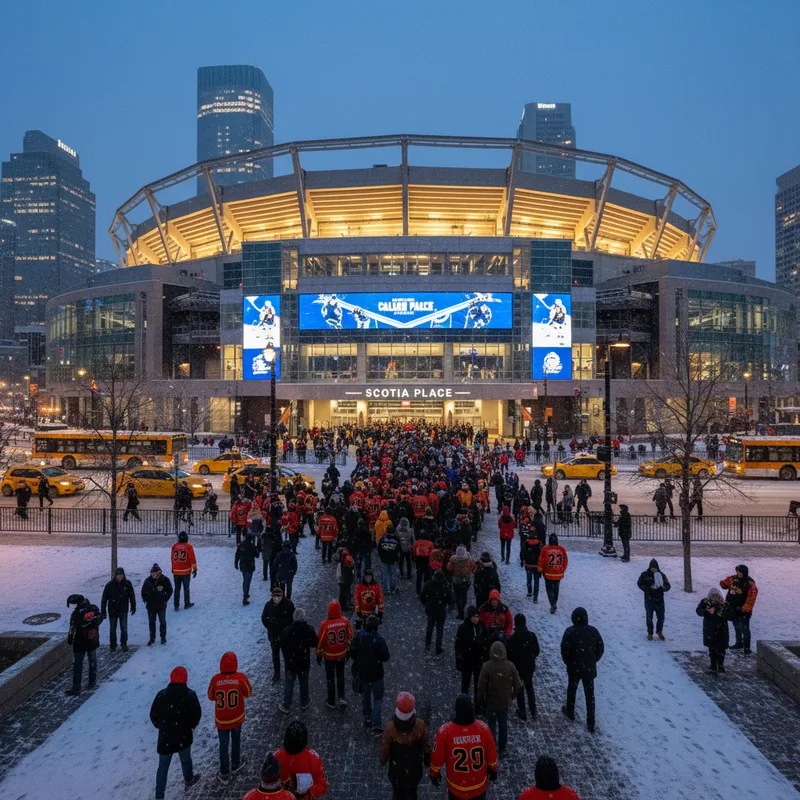
For Calgary, the split schedule means early-round games will bring a steady run of weekday crowds, not just a single championship weekend spike. Edmonton’s semifinal and final package concentrates the highest-demand dates into a tighter window.
In the source announcement, the scale of the tournament was pitched as a provincewide moment for sports tourism and hospitality.
“Beyond the hockey itself, the event is expected to generate $375 million in economic activity, support more than 43,000 jobs, and fill nearly 172,000 hotel room nights across the province,” said Emily Edwards, a Calgary-based writer covering the announcement.
Beyond the hockey itself, the event is expected to generate $375 million in economic activity, support more than 43,000 jobs, and fill nearly 172,000 hotel room nights across the province.
What fans can expect, and what is still unknown
What the bid does not yet answer is the practical question fans will ask first, ticket details.
No pricing, on-sale dates, or team format details were included in the Alberta announcement. That leaves fans waiting for the tournament organizer to confirm when seats will hit the market and what packages will be available for games in Calgary, Edmonton, and Prague.
Even without those details, the venue assignments provide an early clue about how the week could unfold. Calgary’s seven-game allotment suggests the city will see multiple countries and fan bases cycle through, creating repeat business for bars, hotels, and rideshares.
Edmonton’s two semifinals and championship are likely to produce the sharpest travel peak. Those games also bring the highest media demand, which can compress downtown logistics around the arena.
Alberta’s latest hosting win also lands amid a wider push to build attractions that pull visitors off the highway and into local venues. In Western Australia, for example, a new $595,000 facility opened for a volunteer group restoring vehicles, with organizers pitching it as a long-term draw for tourists and enthusiasts. That project was detailed in a report on the Esperance Mechanical Restoration Group.
How the 2028 schedule compares with past world cup tournaments
The World Cup of Hockey has run only three times since the mid-1990s. That scarcity is part of the tournament’s appeal, since it creates pent-up demand among fans who want best-on-best international hockey.
With games split between Alberta and Prague, the 2028 edition adds a European component that was not part of earlier North American-only formats. That could shape travel planning for fans chasing multiple games across two continents.
For Alberta, the hosting assignment places the province back into the global rotation for major winter sports events. It also sets up a test of whether Calgary and Edmonton can convert a short tournament into longer stays, repeat visits, and future bids.
The tournament runs in February 2028, and the championship game will be played at Rogers Place in Edmonton.