Calgary Weather
Weather in Calgary, Alberta: current conditions, forecast, warnings, monthly averages and seasonal guide
8°C
Partly cloudy
Updated 28 Apr, 10:19 am
High / Low
14°C / -1°C
Feels Like
5°C
Humidity
46%
Wind
N 2 km/h
Wind Gusts
13 km/h
Dew Point
-3°C
Pressure
897 hPa
Rain Today
0 mm
UV Index
6.1 High
Hourly forecast
Now
14°C
1%
16km/h
17:00
13°C
1%
16km/h
18:00
14°C
3%
15km/h
19:00
13°C
2%
16km/h
20:00
11°C
2%
15km/h
21:00
8°C
2%
9km/h
22:00
6°C
4%
3km/h
23:00
5°C
4%
3km/h
Wed 29 Apr
00:00
4°C
8%
5km/h
01:00
3°C
5%
8km/h
02:00
2°C
2%
8km/h
03:00
2°C
1%
7km/h
04:00
1°C
1%
6km/h
05:00
1°C
1%
8km/h
06:00
-1°C
1%
7km/h
07:00
-2°C
1%
7km/h
08:00
3°C
1%
5km/h
09:00
7°C
1%
10km/h
10:00
9°C
1%
13km/h
11:00
10°C
1%
13km/h
12:00
10°C
1%
12km/h
13:00
10°C
1%
12km/h
14:00
11°C
2%
13km/h
15:00
12°C
2%
14km/h
16:00
12°C
2%
14km/h
17:00
12°C
2%
13km/h
18:00
12°C
2%
15km/h
19:00
12°C
2%
14km/h
20:00
11°C
1%
12km/h
21:00
9°C
1%
7km/h
22:00
7°C
1%
7km/h
23:00
6°C
1%
5km/h
Thu 30 Apr
00:00
5°C
1%
3km/h
01:00
3°C
5km/h
02:00
3°C
8km/h
03:00
2°C
6km/h
04:00
3°C
7km/h
05:00
3°C
7km/h
06:00
4°C
6km/h
07:00
5°C
6km/h
08:00
7°C
4km/h
09:00
9°C
4km/h
10:00
11°C
6km/h
11:00
13°C
9km/h
12:00
15°C
11km/h
13:00
16°C
13km/h
14:00
17°C
15km/h
15:00
18°C
15km/h
7-day forecast for Calgary
| Day | Conditions | Rain | Temp | Summary | |
|---|---|---|---|---|---|
| Today28 Apr | Overcast | 4% | 14°C-1°C | Overcast with a high of 14°C and low of -1°C. 4% chance of rain. UV index 6.1 (high). | |
| Wed29 Apr | Overcast | 8% | 12°C-2°C | Overcast with a high of 12°C and low of -2°C. 8% chance of rain. UV index 6.3 (high). | |
| Thu30 Apr | Overcast | 1% | 19°C2°C | Overcast with a high of 19°C and low of 2°C. 1% chance of rain. UV index 6.1 (high). | |
| Fri1 May | Overcast | 24% | 15°C9°C | Overcast with a high of 15°C and low of 9°C. 24% chance of rain. UV index 6.2 (high). | |
| Sat2 May | Moderate drizzle | 24%1.2mm | 13°C8°C | Moderate drizzle with a high of 13°C and low of 8°C. 24% chance of rain, up to 1.2mm. UV index 4.9 (moderate). | |
| Sun3 May | Overcast | 6% | 22°C7°C | Overcast with a high of 22°C and low of 7°C. 6% chance of rain. UV index 6.4 (high). | |
| Mon4 May | Overcast | 4% | 24°C10°C | Overcast with a high of 24°C and low of 10°C. 4% chance of rain. UV index 5.8 (moderate). |
Extended outlook — days 8 to 14
Extended forecasts beyond 7 days are less reliable and should be used as a general guide only.
| Day | Conditions | Rain | Temp | Summary | |
|---|---|---|---|---|---|
| Tue5 May | Overcast | 10% | 16°C8°C | Overcast with a high of 16°C and low of 8°C. 10% chance of rain. UV index 3.6 (moderate). | |
| Wed6 May | Overcast | 11% | 19°C5°C | Overcast with a high of 19°C and low of 5°C. 11% chance of rain. UV index 6.8 (high). | |
| Thu7 May | Light drizzle | 16%1.5mm | 23°C8°C | Light drizzle with a high of 23°C and low of 8°C. 16% chance of rain, up to 1.5mm. UV index 6.6 (high). | |
| Fri8 May | Light drizzle | 20%0.4mm | 25°C11°C | Light drizzle with a high of 25°C and low of 11°C. 20% chance of rain, up to 0.4mm. UV index 6.8 (high). | |
| Sat9 May | Light drizzle | 35%2.9mm | 23°C12°C | Light drizzle with a high of 23°C and low of 12°C. 35% chance of rain, up to 2.9mm. UV index 6.1 (high). | |
| Sun10 May | Overcast | 39% | 16°C11°C | Overcast with a high of 16°C and low of 11°C. 39% chance of rain. UV index 3.9 (moderate). | |
| Mon11 May | Overcast | 39% | 20°C8°C | Overcast with a high of 20°C and low of 8°C. 39% chance of rain. UV index 4.7 (moderate). |
Sun & Moon — Calgary
Sunrise06:14
Sunset20:53
Daylight14h 39m
PhaseLast Quarter
Illumination54%
UV Index — Calgary
6.1
High
03681114
Protection required. Seek shade during midday, wear sunscreen and a hat.
Air Quality — Calgary
29
Fair
020406080100+
PM2.517 µg/m³
PM1020.8 µg/m³
US AQI49
Air quality is acceptable. Unusually sensitive people should consider limiting prolonged outdoor exertion.
Air quality data from Open-Meteo
Climate overview
Calgary, Alberta, experiences a humid continental climate, classified as Dfb under the Köppen system. This designation signifies warm summers and cold, snowy winters, typical of interior North American regions situated at mid-latitudes. The city's elevation, approximately 1,048 meters above sea level, significantly influences its climate, leading to cooler temperatures and more pronounced seasonal variations compared to lower-lying areas at similar latitudes. The Rocky Mountains, located about 80 kilometers to the west, play a crucial role in shaping Calgary's weather patterns, particularly through the phenomenon of chinook winds.
Geographic influences are paramount to Calgary's distinct climate. The formidable barrier of the Rocky Mountains creates a rain shadow effect, limiting the amount of moisture reaching the city from Pacific weather systems. This also sets the stage for the famous chinook winds, which are warm, dry winds that descend the mountain slopes, rapidly raising temperatures in winter. These sudden thaws can be dramatic, often bringing temperature shifts of 10 to 20 degrees Celsius in a matter of hours, providing welcome but temporary relief from the intense cold.
Prevailing winds generally come from the west, carrying air masses that have been modified by their passage over the mountains. In summer, these winds can bring relatively dry air, while in winter, they are the harbingers of chinooks. Arctic air masses frequently push south from the Canadian prairies during the colder months, contributing to Calgary's reputation for harsh winters. The lack of significant oceanic influence, being deep within the continent, means Calgary experiences greater temperature extremes than coastal cities.
Compared to other Canadian cities, Calgary's climate stands out. While it shares cold winters with cities like Winnipeg (Dfb), Calgary's chinooks offer a unique variability and intermittent warmth not found in the flatter prairie regions. Its summers, while warm, are generally drier and less humid than those in cities further east like Toronto (Dfb). The city's high sunshine hours are another distinguishing feature, even during the colder months, partly due to the mountain proximity and chinook-cleared skies.
Calgary receives approximately 418 mm (16.5 inches) of rainfall annually, with the wettest months from June and July, with June typically receiving the most rainfall. Calgary boasts an impressive average of over 2,400 hours of bright sunshine annually, making it one of Canada's sunniest major cities. Daily averages range significantly across seasons, with summer seeing 9-10 hours, spring and autumn around 6-7 hours, and winter still offering a respectable 4-5 hours, often enhanced by chinook-cleared skies. This abundance of sunshine, well above the national average, contributes to higher UV levels, especially from late spring to early autumn, necessitating year-round sun protection for outdoor activities. The consistent sunshine significantly impacts the local lifestyle, encouraging outdoor recreation despite the cold.
Calgary's microclimates are significantly influenced by its topography and the nearby Rocky Mountains. The city center, with its dense urban development, experiences a notable urban heat island effect, particularly at night, where temperatures can be several degrees warmer than surrounding rural areas. This is due to heat absorption by buildings and pavement.
Elevation differences, even within the city, can lead to subtle variations in temperature and precipitation. Areas closer to the foothills might experience slightly more frequent chinook effects, leading to milder winter days. The Bow and Elbow River valleys can act as cold air traps, especially on clear, calm winter nights, leading to localized frost hollows and lower minimum temperatures.
Chinook winds, while affecting the entire city, can feel more pronounced or cause more rapid temperature swings in areas exposed on the west side of the city. Conversely, some eastern districts might be shielded more effectively from their direct force. These localized variations mean that weather conditions can differ noticeably across different Calgary neighborhoods, demanding a keen eye on forecasts.
Monthly averages for Calgary
Climate data sourced from Environment and Climate Change Canada climate data for Calgary International Airport. Summer temperatures range from 10°C to 23°C (50°F to 73°F), often reaching into the high 20s and low 30s during heatwaves, while winter sits between -13°C to -1°C (9°F to 30°F), with occasional extreme lows reaching -30°C or colder during Arctic outbreaks.
| Month | Avg High | Avg Low | Rain (mm) | Rain Days |
|---|---|---|---|---|
| January | -1.7°C | -13.4°C | 10.1 | 9.4 |
| February | 0.4°C | -11.9°C | 10.4 | 8 |
| March | 4.4°C | -7.3°C | 17.7 | 8 |
| April | 11.4°C | -1.9°C | 27.2 | 8 |
| May | 16.4°C | 3°C | 55.7 | 10.8 |
| June | 20.2°C | 7.3°C | 94 | 13.3 |
| July | 22.9°C | 9.3°C | 71.3 | 11.2 |
| August | 22.2°C | 8.6°C | 59.3 | 10.2 |
| September | 17.5°C | 4.1°C | 40.5 | 8.7 |
| October | 11.3°C | -1°C | 16.5 | 6.3 |
| November | 3.4°C | -8.3°C | 11.3 | 7.4 |
| December | -1.1°C | -12.5°C | 9.8 | 8.5 |
Water temperature
Water temperatures in the Bow River, which flows through Calgary, vary significantly with the seasons. During the summer months, temperatures typically range from 16-20°C (61-68°F), making it suitable for activities like rafting, kayaking, and stand-up paddleboarding, though it remains quite cool due to its mountain origins. Swimming without a wetsuit is generally only comfortable for short periods, even in summer.
In winter, the river's temperature plummets to near-freezing, often between 0-4°C (32-39°F). During this time, parts of the river may freeze over, and any water activities are strictly limited and require specialized cold-weather gear. While not a swimming destination, the river supports diverse aquatic life adapted to these fluctuating temperatures year-round. Estuaries are not applicable as Calgary is an inland city.
Summer water temperatures around Calgary range from 16-20°C (61-68°F), cooling to 0-4°C (32-39°F) in winter.
Things to do this summer in Calgary
Summer in Calgary is generally warm and sunny, but temperatures can fluctuate. Pack a mix of light clothing, including shorts, t-shirts, and dresses, but always include a light jacket, sweater, or hoodie for cooler evenings and sudden temperature drops associated with evening thunderstorms. Sunscreen, a wide-brimmed hat, and sunglasses are essential due to high UV levels. Stay hydrated, especially if engaging in outdoor activities. Thunderstorms can develop rapidly, so check forecasts and be prepared for rain with a compact umbrella or lightweight waterproof jacket.
- Explore Prince's Island Park
- Attend the Calgary Stampede
- Cycle the Bow River Pathway
- Visit the Calgary Zoo
- Go rafting on the Bow River
- Explore Heritage Park Historical Village
- Hike in Fish Creek Provincial Park
- Enjoy a patio at Stephen Avenue Walk
Best time to visit Calgary
The best time to visit Calgary is during the summer months, from June to August, when the weather is warmest and most conducive to outdoor activities and festivals. This peak season offers long daylight hours, comfortable temperatures, and a vibrant atmosphere with events like the Calgary Stampede. However, accommodation prices and crowds are highest during this period.
Shoulder seasons, late May to early June and September to early October, can also be excellent. Spring brings blossoming landscapes and fewer crowds, while autumn showcases stunning fall foliage. Temperatures are cooler but often pleasant, making it ideal for hiking and exploring without the peak summer rush. Visitors during these times should pack layers as temperatures can fluctuate.
Winter, from November to March, is ideal for snow sports enthusiasts, with proximity to world-class ski resorts like Banff and Lake Louise. However, visitors must be prepared for very cold temperatures, heavy snowfall, and potential chinook winds. Those not interested in winter sports or indoor activities may find this period challenging due to the harsh conditions.
Weather radar — Calgary
View live rain radar for Calgary
Live radar imagery from the official weather service →
Weather warnings & safety
Calgary faces a range of severe weather risks throughout the year. Summer brings the threat of intense thunderstorms, often accompanied by large hail (earning Calgary the moniker "Hailstorm Alley"), strong winds, and heavy downpours that can lead to localized flash flooding. These storms are most common from late May to early September.
Winter is characterized by extreme cold, with Arctic outbreaks capable of dropping temperatures to -30°C or lower, posing risks of frostbite and hypothermia. Heavy snowfall and blizzards can cause significant travel disruptions. While chinook winds provide temporary relief, the rapid temperature changes they bring can also contribute to icy conditions.
Other risks include drought, particularly during dry spells in summer, which can increase the risk of grass fires in surrounding areas. Though less common directly within the city, wildfires in the broader Alberta region can lead to significant smoke plumes impacting air quality. High winds, both chinook-driven and associated with strong storm systems, are a perennial concern.
Official warning sources: Environment and Climate Change Canada Warnings (Alberta) · 511 Alberta Road Conditions · Alberta Wildfire Status
Latest weather news — Calgary
News

News
Calgary crews play catch-up with potholes after wild weather
13 Apr 2026
Environment
Calgary neighbourhoods show 10 C temperature gap, researcher finds
9 Apr 2026
Crime
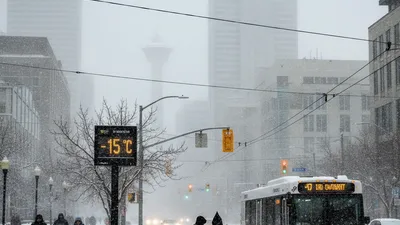
Calgary snowstorm causes over 160 crashes
7 Apr 2026
News
Calgary snowstorm causes 160-plus crashes and two dozen injuries
3 Apr 2026Weather near Calgary
Frequently asked questions about Calgary weather
What is the weather in Calgary right now?
Right now in Calgary it is 8°C and partly cloudy. Today's high is 14°C with a low of -1°C. Humidity is at 46%. Wind is N at 2 km/h.
What is the 14-day forecast for Calgary?
Today (28 Apr): Overcast with a high of 14°C and low of -1°C. 4% chance of rain. UV index 6.1 (high). Wed (29 Apr): Overcast with a high of 12°C and low of -2°C. 8% chance of rain. UV index 6.3 (high). Thu (30 Apr): Overcast with a high of 19°C and low of 2°C. 1% chance of rain. UV index 6.1 (high). Fri (1 May): Overcast with a high of 15°C and low of 9°C. 24% chance of rain. UV index 6.2 (high). Sat (2 May): Moderate drizzle with a high of 13°C and low of 8°C. 24% chance of rain, up to 1.2mm. UV index 4.9 (moderate). Sun (3 May): Overcast with a high of 22°C and low of 7°C. 6% chance of rain. UV index 6.4 (high). Mon (4 May): Overcast with a high of 24°C and low of 10°C. 4% chance of rain. UV index 5.8 (moderate). Tue (5 May): Overcast with a high of 16°C and low of 8°C. 10% chance of rain. UV index 3.6 (moderate). Wed (6 May): Overcast with a high of 19°C and low of 5°C. 11% chance of rain. UV index 6.8 (high). Thu (7 May): Light drizzle with a high of 23°C and low of 8°C. 16% chance of rain, up to 1.5mm. UV index 6.6 (high). Fri (8 May): Light drizzle with a high of 25°C and low of 11°C. 20% chance of rain, up to 0.4mm. UV index 6.8 (high). Sat (9 May): Light drizzle with a high of 23°C and low of 12°C. 35% chance of rain, up to 2.9mm. UV index 6.1 (high). Sun (10 May): Overcast with a high of 16°C and low of 11°C. 39% chance of rain. UV index 3.9 (moderate). Mon (11 May): Overcast with a high of 20°C and low of 8°C. 39% chance of rain. UV index 4.7 (moderate).
What is the air quality in Calgary today?
The current air quality index in Calgary is 29 (European AQI), rated "Fair". Air quality is acceptable. Unusually sensitive people should consider limiting prolonged outdoor exertion. PM2.5 is 17 µg/m³. PM10 is 20.8 µg/m³.
What is the air quality in Calgary today?
Calgary's air quality can vary significantly due to local emissions, industrial activity, and most notably, wildfire smoke from surrounding regions in summer. You can find the real-time Air Quality Health Index (AQHI) for Calgary on the Environment and Climate Change Canada website or the dedicated /weather/air-quality sub-page. This index provides a scale from 1 (low risk) to 10+ (very high risk) and offers health advice based on pollutant levels like PM2.5 and PM10.
Why is the air quality so bad in Calgary today?
Poor air quality in Calgary is most often attributed to wildfire smoke, particularly during the summer months when large fires occur across Western Canada and the US. These smoke plumes can travel long distances, significantly elevating particulate matter levels (PM2.5) and creating hazy conditions. Other factors can include urban pollution from vehicles and industry, or dust from dry conditions, though wildfire smoke is typically the dominant cause for widespread 'bad' air quality days.
What's the current wind speed in Calgary?
Current wind speeds in Calgary fluctuate daily and hourly, influenced by high- and low-pressure systems and the proximity of the Rocky Mountains. Average wind speeds are typically moderate, but chinook winds can bring very strong gusts, especially in winter. For the most up-to-date wind information, including speed, direction, and gusts, please refer to the live wind forecast on our /weather/wind page.
What is the UV index in Calgary?
The UV index in Calgary varies by season and time of day. It is generally low in winter (1-2) but can reach moderate to high levels (5-7+) during summer, especially around midday. Even on cloudy days, UV radiation can be strong. Always check the daily UV index on our /weather/uv page and apply appropriate sun protection, such as sunscreen and hats, especially between 11 AM and 3 PM.
How much rain does Calgary get in a month?
Calgary receives an average of 418 mm of precipitation annually, with the wettest months being June and July. Monthly rainfall averages range from about 10 mm in January and February to over 90 mm in June. These figures represent long-term averages; actual rainfall in any given month can vary significantly. For detailed monthly precipitation data, refer to our 'Monthly Averages' section.
When is sunrise and sunset in Calgary?
Sunrise and sunset times in Calgary vary dramatically throughout the year due to its northern latitude. In summer, days are very long, with sunrise as early as 5:20 AM and sunset as late as 10:00 PM. In contrast, winter days are short, with sunrise around 8:30 AM and sunset as early as 4:30 PM. For precise daily times and a 14-day forecast, visit our dedicated /weather/sunrise-sunset page.
What is the moon phase tonight in Calgary?
The moon phase cycles through new moon, crescent, quarter, gibbous, and full moon approximately every 29.5 days. While specific moon phases don't directly impact daily weather, they are a fascinating celestial event. You can find the current moon phase, illumination percentage, and a 14-day moon phase calendar on our /weather/sunrise-sunset page.
What should I wear for Calgary weather?
Calgary weather demands versatile clothing due to its variability. In summer, light layers are best, with a jacket for cool evenings or sudden storms. Spring and autumn require layering, including a waterproof outer shell, as temperatures can fluctuate wildly. Winter necessitates heavy, insulated, and waterproof outerwear, including a warm coat, hat, gloves, and thermal boots, due to extreme cold and snow. Always check the forecast before heading out.
Does Calgary get a lot of snow?
Yes, Calgary typically receives an average of around 128 cm of snow annually. Snowfall can occur from as early as September to as late as May, though the heaviest months are usually November to March. While heavy snowfalls are common, chinook winds can cause rapid melting, leading to fluctuating snow cover throughout the winter months.
Are there hail storms in Calgary?
Yes, Calgary is famously located in 'Hailstorm Alley' and experiences frequent hailstorms during the summer months, particularly from June to August. These storms can be severe, producing large hail that can cause significant damage to property and vehicles. It is advisable to seek shelter and protect vehicles during hailstorm warnings. Always be aware of severe thunderstorm watches and warnings during the summer.
What's the best time for outdoor activities in Calgary?
The best time for general outdoor activities in Calgary is during the summer (June-August) when temperatures are warmest and daylight hours are longest, perfect for hiking, cycling, and water sports on the Bow River. For winter sports like skiing and snowboarding, December to March offers optimal snow conditions. Spring and autumn provide pleasant temperatures for exploring parks with fewer crowds.
What are driving conditions like in Calgary in winter?
Winter driving conditions in Calgary can be challenging due to heavy snow, ice, and cold temperatures. Roads can become very slippery, and visibility may be reduced during blizzards. Chinook winds can also cause rapid melting and refreezing cycles, leading to black ice. It is highly recommended to have winter tires, drive cautiously, and leave extra space between vehicles. Check live road conditions and weather warnings before travel.
What are the average temperatures in Calgary?
Calgary experiences distinct seasonal temperatures. Average high temperatures range from around -2°C in January to 23°C in July. Average lows range from -13°C in January to 9°C in July. These averages can be significantly influenced by chinook winds in winter (warming) and Arctic fronts (cooling). For daily forecasts and historical data, our monthly averages table and live forecast pages provide detailed information.
How does Calgary's elevation affect its weather?
Calgary's elevation of over 1,000 meters above sea level has several key effects on its weather. It contributes to cooler overall temperatures compared to lower-lying areas at similar latitudes and often results in a longer frost-free period locally due to the city's specific topography. Additionally, the higher elevation plays a role in the intensity of solar radiation and the dynamics of chinook winds, which are a defining feature of the local climate.
What is the longest day in Calgary?
The longest day in Calgary occurs around the summer solstice, typically June 20th or 21st. On this day, Calgary experiences its maximum daylight hours, with sunrise occurring very early, often before 5:30 AM, and sunset happening very late, around 10:00 PM. This provides nearly 17 hours of daylight, perfect for enjoying outdoor summer evenings.
What are the common wind patterns in Calgary?
Calgary's common wind patterns are largely influenced by its proximity to the Rocky Mountains. Prevailing winds are often from the west, bringing either modified Pacific air or the famous warm, dry chinook winds, especially in winter. These chinooks can cause dramatic temperature increases. During the summer, winds can be more variable, often associated with convective thunderstorms. Easterly winds usually bring colder, more stable air masses from the prairies.