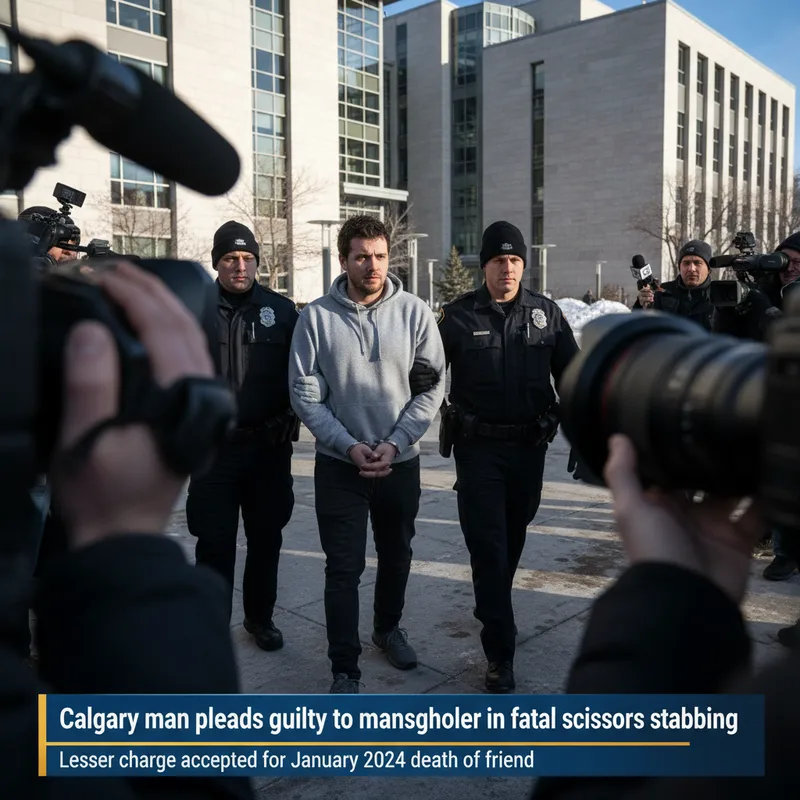
A Calgary man who was scheduled to begin his second-degree murder trial this week has instead pleaded guilty to the lesser charge of manslaughter in the death of his friend, Jose Miguel Gutierrez Polanco.
Hans Jimenez Varela, 29, entered the plea in a Calgary courtroom on Monday, admitting to the January 2024 killing. The development came as a surprise, aborting a two-week trial that was set to proceed before a jury.
The victim, 28-year-old Gutierrez Polanco, was killed on Jan. 28, 2024. His body, however, was not discovered for more than two weeks, when it was found on Feb. 14. Jimenez Varela was subsequently charged three weeks later.
A jury had been selected for the trial last week, but the jurors were brought into the courtroom on Monday only to be dismissed by Court of King’s Bench Justice Christopher Simard following the eleventh-hour plea agreement reached by the Crown and defence.
Details of the killing revealed
The plea deal was arranged over the weekend between prosecutor Terrence Mazerolle and defence lawyer Jason Wuttunee. Following the dismissal of the jury, Justice Simard accepted Jimenez Varela's guilty plea to manslaughter.
While a full agreed statement of facts has not yet been submitted to the court, some details of the case were presented. Mr. Wuttunee, the defence lawyer, told the judge that his client admits to stabbing Gutierrez Polanco but argued he lacked the required intent for a murder conviction.
Mr. Jimenez Varela was grossly intoxicated on the offence date.
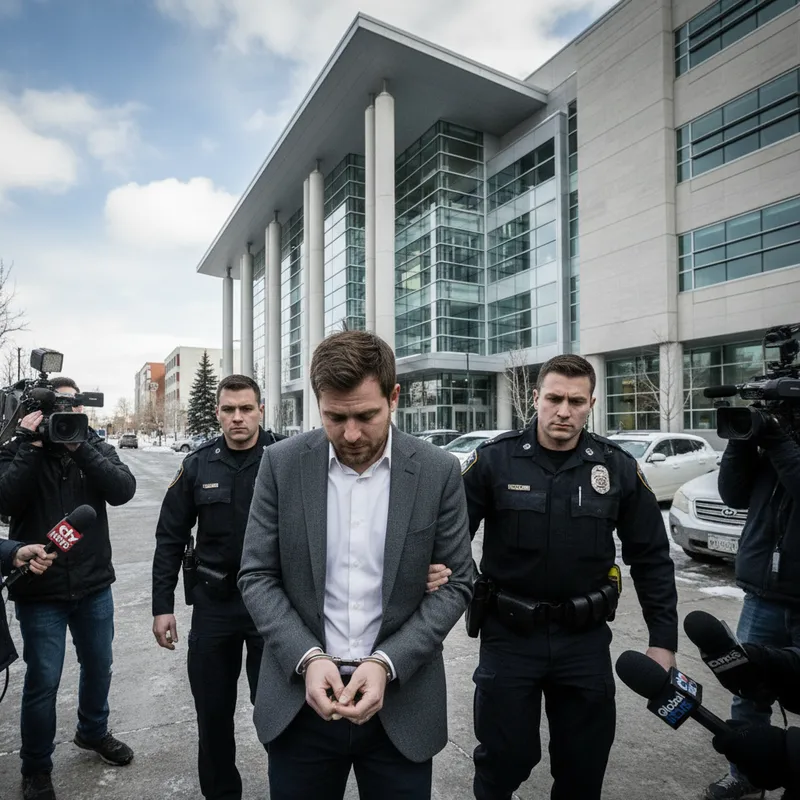
Prosecutor Terrence Mazerolle informed the court that Gutierrez Polanco suffered 12 stab wounds from a pair of scissors. Although most of these wounds were superficial, one proved to be fatal.
Intoxication and criminal intent
The defence's argument hinges on the complex legal concept of intoxication. In Canadian law, a murder conviction requires the Crown to prove beyond a reasonable doubt that the accused had the specific intent to kill or to cause bodily harm they knew was likely to cause death. Extreme intoxication can, in some circumstances, be used as a defence to argue that the accused was incapable of forming this specific intent.
If successfully argued, this can lead to a conviction for a lesser offence like manslaughter, which only requires general intent – meaning the intent to commit the unlawful act of assault, which a reasonable person would see as likely to cause bodily harm. The issue of self-induced intoxication as a defence is a contentious area of Canadian law, subject to ongoing legal debate and modifications in the Criminal Code.
Courts must weigh whether the level of intoxication was so extreme that it resulted in a state akin to automatism, where the person's actions are involuntary. This defence is applied narrowly and depends heavily on the specific facts of a case, as well as expert evidence regarding the effects of the intoxicants on the accused's state of mind.
Calgary's struggle with violent crime
This case concludes as Calgary continues to address issues of violent crime across the city. The tragic death of Mr. Gutierrez Polanco is a stark reminder of the devastating impact of violence on individuals and the community. While overall crime rates fluctuate, high-profile cases of homicide and assault often raise public concern about safety and the effectiveness of the justice system.
The city has seen a number of serious cases proceed through its courts recently, dealing with everything from gang-related violence to domestic disputes that end in tragedy. These incidents place a significant strain on police resources and the judicial system. They also have lasting effects on the families of victims and the sense of security in local neighbourhoods. For more on other civic issues, read about how Calgary is battling a growing illegal dumping problem.
In another recent case showing the breadth of major crimes prosecuted in the city, a Calgary man, Hussein Sobhe Borhot, pleaded guilty to terrorism charges after travelling to Syria in 2013 to join the Islamic State. An extensive seven-year RCMP investigation, which included an undercover operation, led to his arrest in 2020. Borhot admitted he initially intended to be a suicide bomber but later became a fighter for the terrorist group before returning to Canada in 2014.
The legal proceedings for Hans Jimenez Varela have been adjourned to a future date. Lawyers will use the time to prepare the formal agreed statement of facts, after which sentencing arguments will be presented before Justice Simard.