
Just when Blake Coleman’s departure from Calgary seemed like a foregone conclusion, the Flames’ front office has reportedly changed its approach to trade discussions involving the veteran forward.
Previous speculation suggested the Flames were actively looking to move Coleman as part of the team’s ongoing retool, aiming to acquire draft picks and prospects. However, recent reports indicate a significant shift in strategy. According to Pierre LeBrun of The Athletic, the team is no longer focused on simply offloading the winger for future assets.
Instead, Calgary’s management is reportedly taking a much more selective stance. LeBrun wrote that if a "hockey trade" that makes sense for the team were to present itself, the Flames would consider it. This clarification is significant, as it suggests any potential deal for Coleman must bring back a player or players who can contribute to the NHL roster immediately, rather than bolstering an already well-stocked collection of draft picks, similar to how Miami lands a top safety.
This marks a departure from the perceived direction of a team thought to be in a full-scale rebuild, prioritizing long-term gains over short-term competitiveness. The new approach implies that General Manager Craig Conroy and his staff see value in maintaining a strong veteran presence and are not willing to subtract a key player without a corresponding addition to the current lineup.
Coleman's performance and value
Blake Coleman, 34, is entering the final year of his contract. His name first entered the rumour mill following a season where his offensive production saw a noticeable dip compared to his career-best performance in 2023-24. During that standout campaign, he tallied 30 goals and 24 assists for 54 points, becoming a crucial offensive driver for the team.
This past season, however, injuries limited him to 69 games, and he finished with 20 goals and 15 assists for 35 points. While these numbers still represent solid production for a middle-six forward known for his defensive prowess, the decline was enough to fuel speculation that the team might look to capitalize on his value before his contract expired.
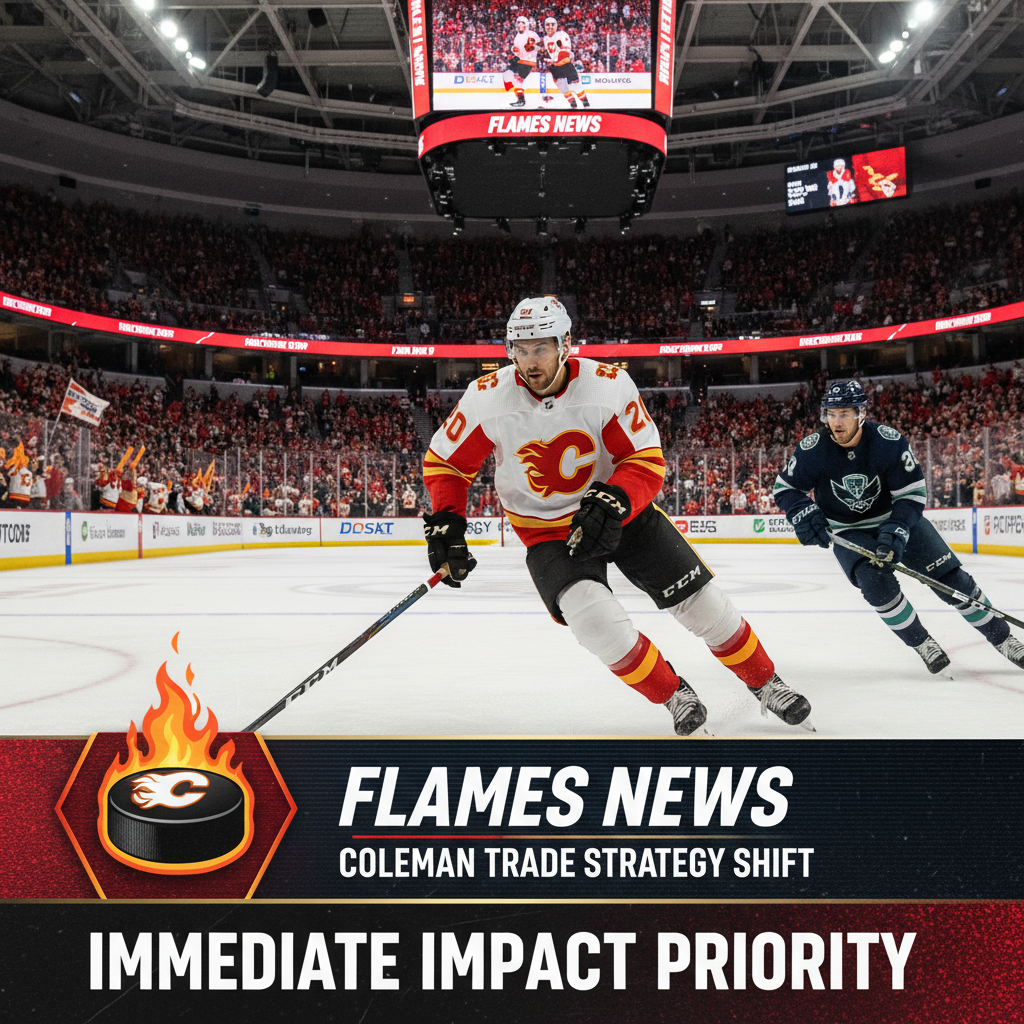
Despite the statistical drop-off, Coleman’s importance to the Flames extends far beyond the scoresheet. He remains a highly respected two-way player, providing critical defensive reliability, a physical edge, and veteran leadership within a locker room that has seen significant turnover. His experience is considered an important stabilizing force as the team navigates its current phase, a factor that management is clearly weighing heavily.
An unexpected alternative emerges
Perhaps the most surprising element of the new reporting is the possibility that Coleman could remain in Calgary beyond the upcoming season. LeBrun said that if a suitable trade does not come to fruition, the Flames would be open to discussing a contract extension with the veteran forward.
This stance reinforces the idea that the organization is not eager to part with Coleman. Rather than viewing him as a disposable asset, the Flames appear to see him as a player who could continue to contribute to the team's success, whether that’s for one more season or potentially longer. This is a significant vote of confidence and a major pivot from the narrative that his exit was imminent.
This patient approach is a luxury afforded by the team’s healthy financial situation. The Calgary Flames currently have just under $23 million in available salary cap space, giving them considerable flexibility in roster decisions. They are not under pressure to shed salary or make a move for financial reasons.
Looking ahead
With only a handful of other players heading for unrestricted free agency next summer, including Ryan Lomberg, Jake Bean, Victor Olofsson, and John Beecher, the Flames are in a position to wait for a trade proposal that genuinely improves the team. They can afford to keep Coleman for the final year of his deal if no such offer materializes.
In recent years, the Flames have seen a number of key veterans depart, signaling a clear shift in direction under a management team trying to build a sustainable winner. While the path forward for the team and its head coach remains a work in progress, the club has shown a commitment to finding stability behind the bench.
For now, Coleman’s future in Calgary is a complicated question with no clear answer. What once looked like a simple transaction to accumulate future assets has evolved into a more nuanced decision. The Flames now seem to be weighing three distinct paths: trade him for immediate help, let him play out his final year, or sign him to a new contract. What the team decides will be a strong indicator of its strategic direction for the immediate future. As LeBrun noted, an extension remains a firm possibility if the right trade never surfaces.