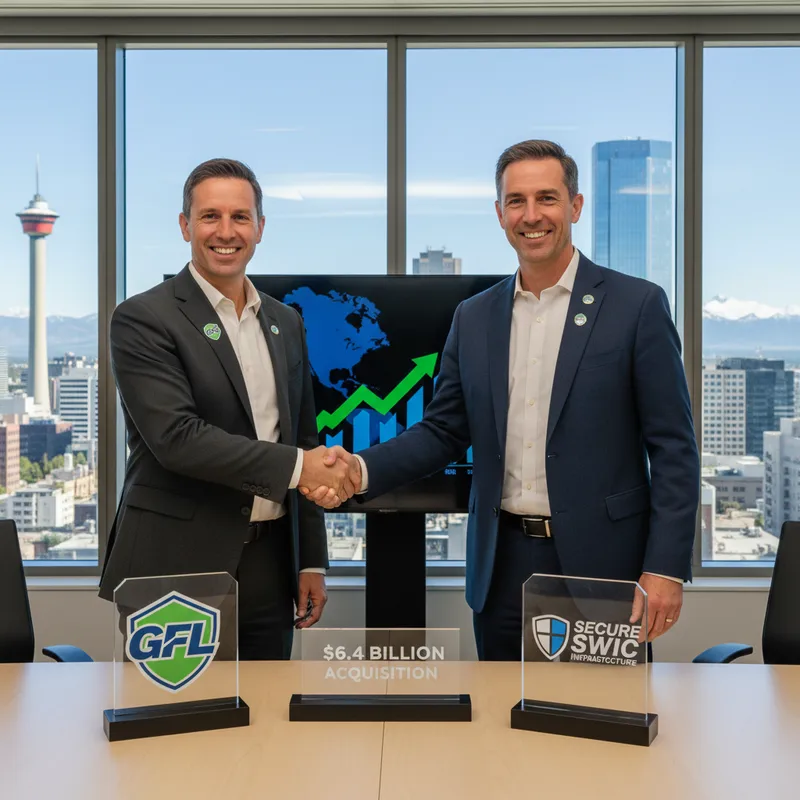
One of North America’s largest environmental services companies, GFL Environmental Inc., announced Monday it is acquiring Calgary-based Secure Waste Infrastructure Corp. in a blockbuster deal valued at $6.4 billion.
The acquisition marks a significant expansion of GFL's footprint in Western Canada, a region its chief executive believes will be a primary driver of the national economy for years to come. The move consolidates two major players in the waste management sector, which handles everything from residential recycling to specialized industrial and oilfield waste.
GFL, which originated in Ontario but recently moved its executive headquarters to Miami, Florida, has been operating in Western Canada for 16 years. This purchase significantly deepens its investment and operational capacity in the region.
Regulatory confidence despite past issues
Despite the massive scale of the merger, GFL’s chief executive, Patrick Dovigi, expressed confidence that the deal would clear regulatory hurdles with Canada’s Competition Bureau. The two companies expect to formally submit the deal for review within the next two weeks.
“We feel very confident, both on the Secure side and on the GFL side, that this should be approved,” Dovigi told analysts during a conference call on Monday.
This confidence comes in spite of Secure Waste's recent history with the regulator. In 2023, the Competition Bureau successfully moved to reverse Secure Waste’s planned merger with another Calgary firm, Tervita Corp. The Bureau argued that the deal would create a monopoly in the oil and gas waste services sector, a decision that was ultimately upheld by the Supreme Court of Canada after an unsuccessful appeal by Secure.
That reversal forced Secure to sell more than $1 billion in assets to Texas-based Waste Connections Inc., a move that paradoxically may have paved the way for the current deal with GFL. Dovigi noted that the prior investigation provides a "good framework" for the new submission, as it clarified the Bureau's expectations and changed the competitive landscape.
A bet on western growth
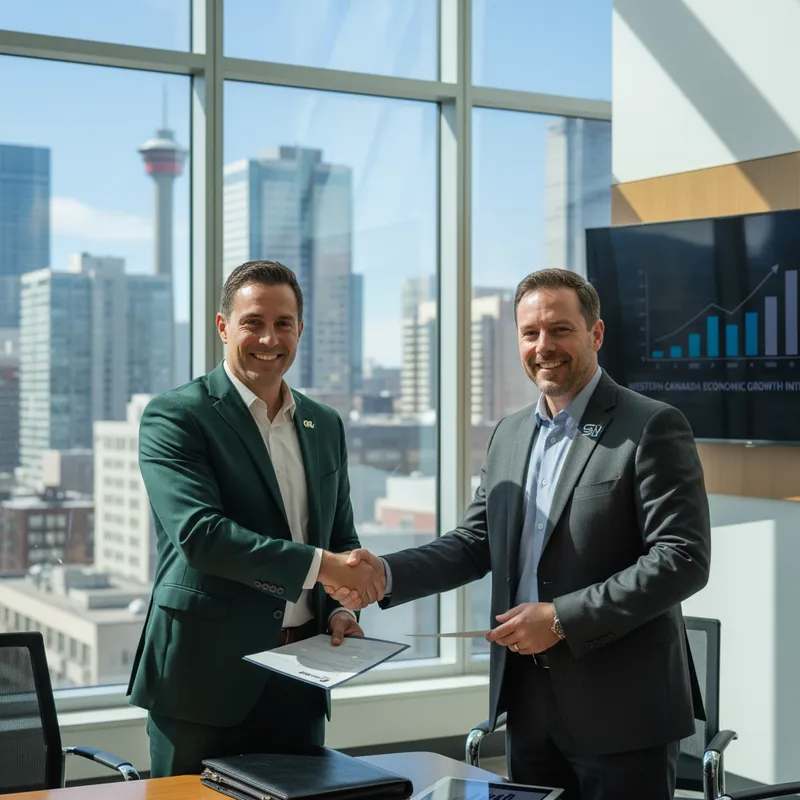
Dovigi framed the acquisition as a strategic investment in the future of Alberta and its neighbouring provinces. While GFL has a long-standing presence, this multi-billion dollar deal signals a renewed and ambitious belief in the region’s economic prospects, particularly tied to its vast natural resources.
“Western Canada is going to be the growth engine for Canada for the next number of years, and we want to have (greater) exposure to that market,” Dovigi said.
Secure Waste’s chief executive, Allen Gransch, said the merger would provide immediate benefits for its customers by leveraging GFL’s extensive network and resources.
With GFL’s scale and platform, we see a clear opportunity to accelerate growth, expand our capabilities and capture opportunities that would take longer to realize on a stand-alone basis.
Secure Waste, founded in 2007, operates more than 80 facilities across Western Canada and North Dakota, specializing in recovery, recycling, and disposal services. The company has a significant focus on the Western Canadian Sedimentary Basin, which is home to one of the world's largest reserves of petroleum and natural gas. Beyond this region, Sydney's landfill crisis sparks regional incinerator backlash.
Smooth integration with no job losses expected
Looking ahead, GFL plans to gradually migrate the Secure Waste brand under its green-and-white banner. However, Dovigi was adamant that the acquisition is focused on growth, not cost-cutting through consolidation.
He assured analysts that no facility closures or staff reductions are anticipated as a result of the deal. “That’s not what this is about,” Dovigi stated, predicting a "very smooth . very quick" integration process.
The move aligns with a broader industry trend identified by GFL’s chief financial officer, Luke Pelosi. Speaking to analysts, Pelosi noted that smaller, regional landfills across Canada are increasingly being replaced by larger, more centralized and technologically advanced facilities. This acquisition gives GFL control over a network of such key infrastructure sites.
The deal is the latest major consolidation in the North American waste management industry, where companies are constantly seeking greater efficiency and scale to service residential, commercial, and industrial clients. With this purchase, GFL solidifies its position as a dominant force in the Canadian market and makes a firm declaration of its faith in the economic vitality of the West.