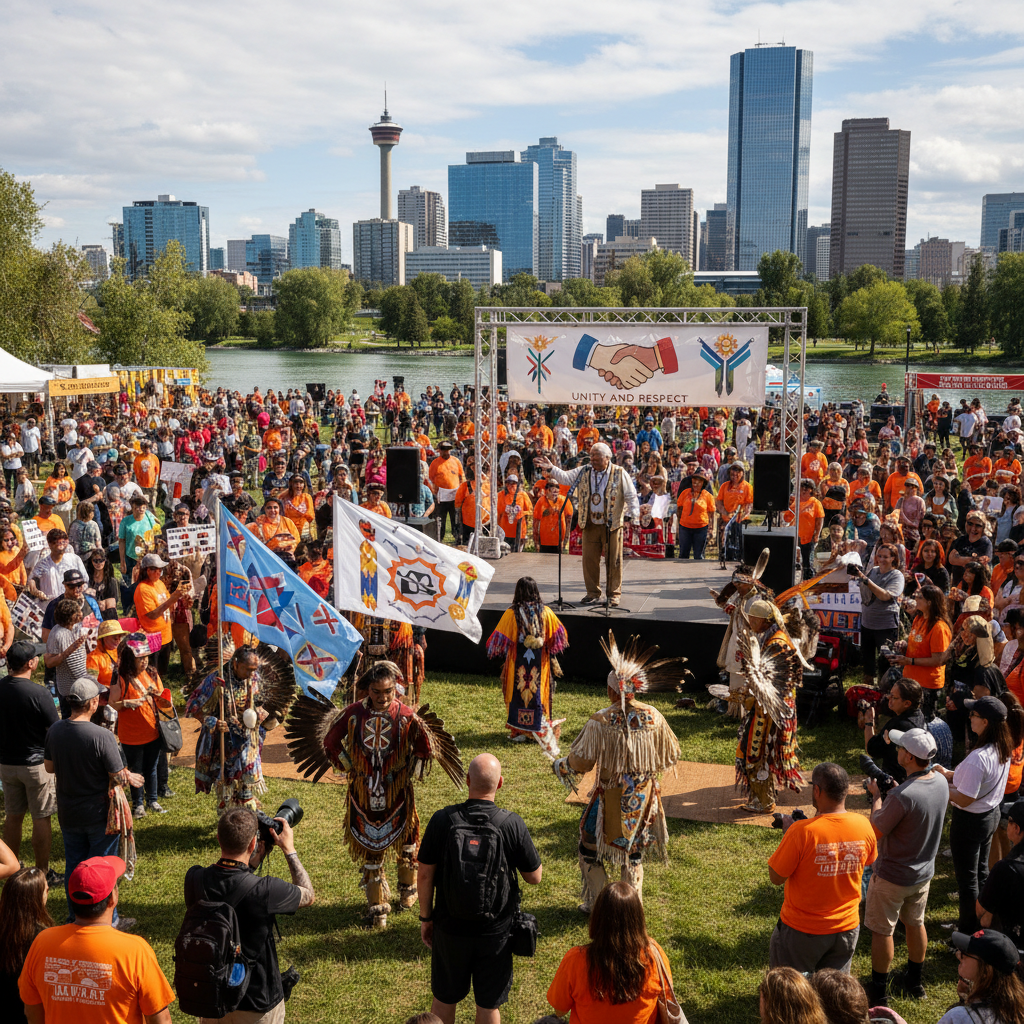
Hundreds of Calgarians gathered at events across the city on Sunday to celebrate National Indigenous Peoples Day, marking the occasion with music, art, and powerful calls for unity and mutual understanding.
The city-wide celebrations on June 21, 2026, provided a platform for Indigenous voices to share their culture and history, while also addressing contemporary political issues, most notably the ongoing debate around Alberta separating from Canada.
Events ranged from a large gathering in Inglewood to the 17th annual Walk for Reconciliation, each drawing crowds of both Indigenous and non-Indigenous people to learn, reflect, and connect. The day served as a vibrant showcase of resilience and a reminder of the need for an ongoing commitment to reconciliation.
A call for unity in Inglewood
At ContainR Art Park in Inglewood, the Indigenous Gathering Place Society hosted a celebration filled with music, storytelling, art, and cultural teachings. The event was guided by elders and knowledge keepers who shared their wisdom with an engaged and diverse audience.
Reconciliation walk honours survivors
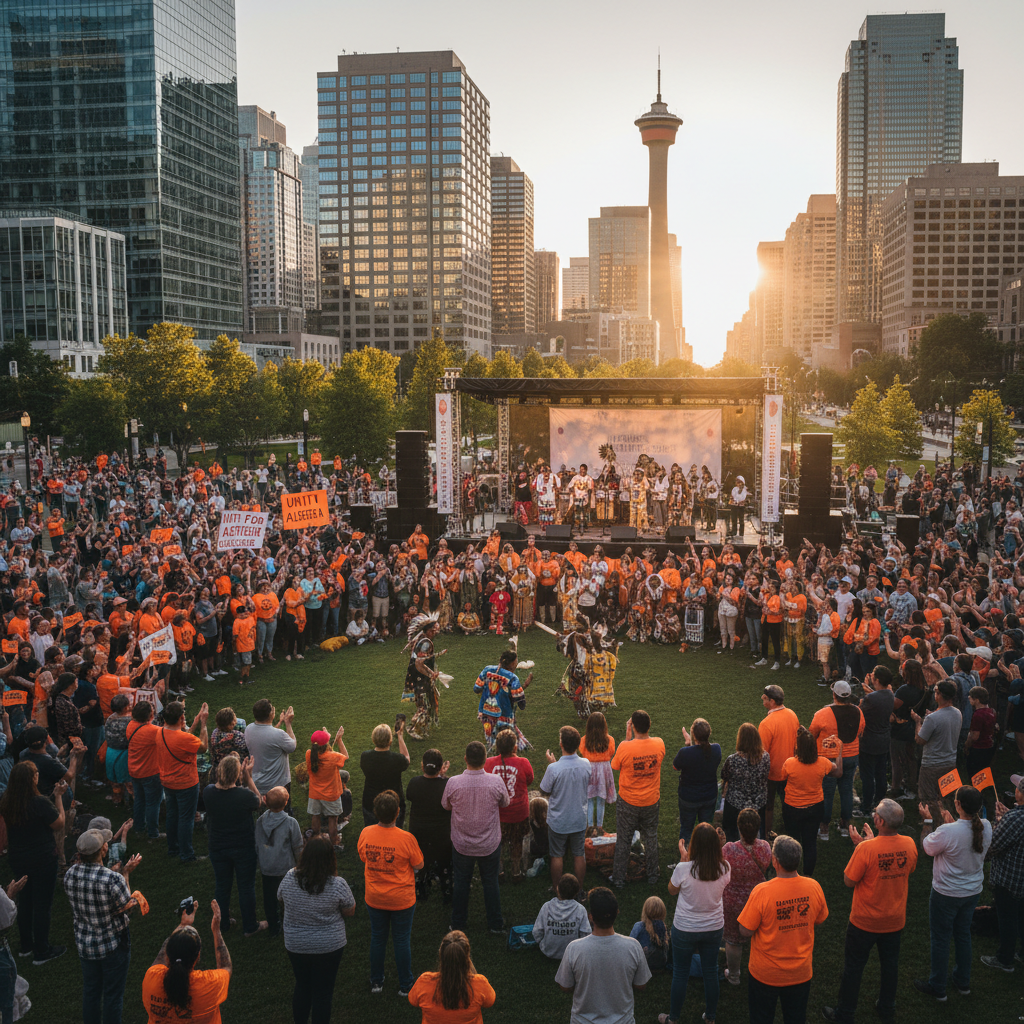
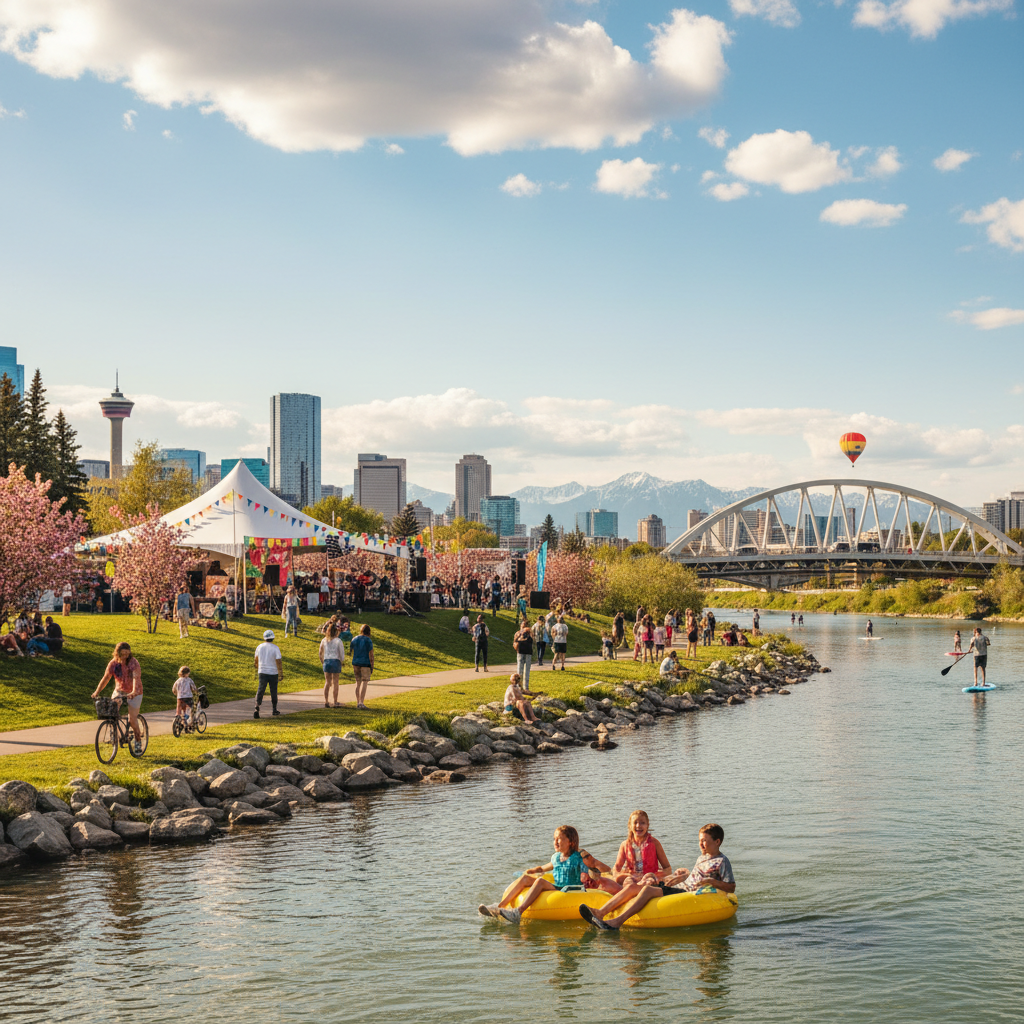
In another major event, about 200 people participated in the 17th annual Walk for Reconciliation. The procession began at the Harry Hays Building in downtown Calgary and moved along the scenic RiverWalk, concluding at The Confluence Historic Site and Parkland.
The destination is a place of deep historical significance, a traditional gathering spot for Indigenous peoples for thousands of years. Upon arrival, attendees were set to participate in an outdoor gathering featuring speeches from residential school survivors, providing a solemn space for truth-telling and reflection. The event was also a celebration, with drumming and dance performances highlighting the strength and vibrancy of Indigenous cultures.
Activities at The Confluence included traditional Indigenous games and special Métis cultural programming held at Hunt House, Calgary's oldest building. These interactive experiences offered attendees a chance to engage directly with the traditions and histories being honoured.
City-wide celebrations of culture
The National Music Centre also participated in the day by opening its doors for a free public event. The lineup featured a diverse range of Indigenous performers, including Inuit throat-singing duo Tudjaat, the musical group Black Crow Funk, Métis singer-songwriter Jody Funk, and electronic artist sean beaver. The event underscored the integral role of Indigenous artists in Canada's musical landscape.
These celebrations are part of a long tradition. National Indigenous Peoples Day has been a cornerstone of cultural recognition for three decades. According to the Government of Canada, the day was first recognized in 1996, providing an opportunity for all Canadians to recognize and celebrate the unique heritage, diverse cultures, and outstanding contributions of First Nations, Inuit, and Métis peoples.
In a statement, Alberta's Minister of Indigenous Relations, Rajan Sawhney, echoed these sentiments, noting the day is for both celebration and reflection. She highlighted the 30th anniversary of the day being formally recognized by Parliament.
(It is) an opportunity to celebrate the rich cultures, histories and leadership of First Nations, Métis and Inuit peoples. It is also a time to recognize and reflect on the enduring contributions of Indigenous peoples, whose knowledge, traditions and achievements continue to shape Alberta's communities, economy and future.
Sawhney emphasized that reconciliation is not a single act but an ongoing process built on connection and shared understanding. "Days like National Indigenous Peoples Day remind us that reconciliation is built over time, through relationships, learning and everyday action," she said. "Today reaffirms our commitment to listening, learning and celebrating together."