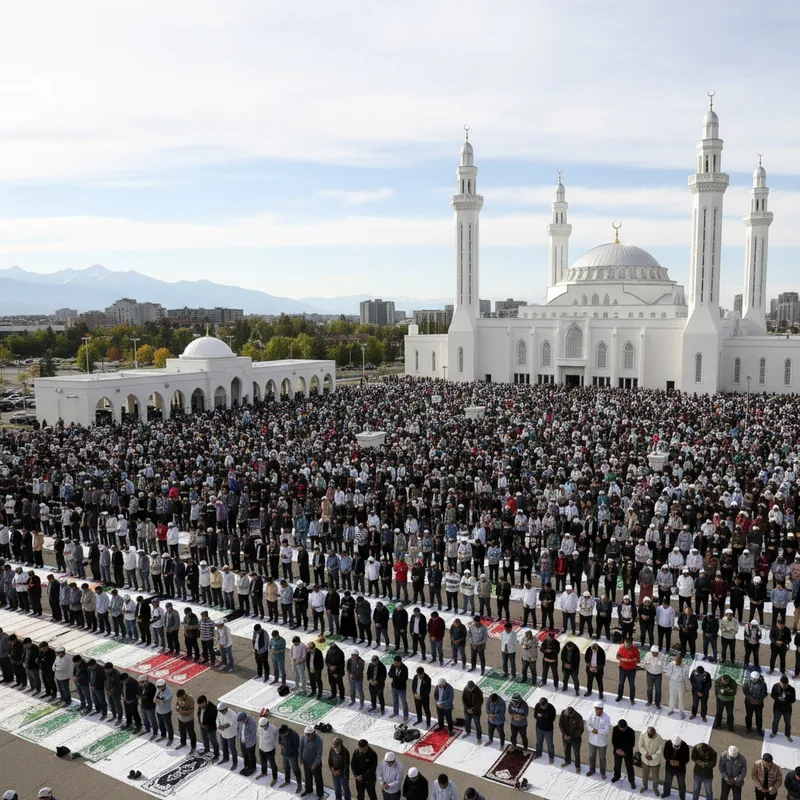
Thousands of Calgarians packed Baitun-Nur Mosque on Friday to mark Eid al-Fitr. The morning prayers capped 29 days of Ramadan fasting.
Worshippers streamed into the northeast Calgary mosque for a special congregational prayer, then headed home to celebrate with family meals and visits. Organizers described the day as both religious and communal, built around gratitude after a month of discipline.
What happened at baitun-nur mosque for eid al-fitr
“During the past month, we fasted, we abstained from eating (and) drinking during the whole day, and engaged ourselves in the worship of God and reading his holy book, the Holy Quran,” said Attaul Wahab, Imam at the Baitun-Nur Mosque.
Wahab said Eid begins with worship before any parties or feasts. “But in Islam, we give thanks to Allah first. That’s why there is an extra prayer on the day of Eid … to give us this idea that we must not forget our Creator, Allah the Almighty, even during our celebration, during our best moments.”
He framed the gathering as a reminder that faith is practised collectively, not only in private. “The day of Eid is a celebration of that spiritual achievement that we have made, and also it brings the whole community together, and gives us this impression that we are not just an individual. Rather, we are part of a bigger picture. We are part of a bigger community,” he said.
The day of Eid is a celebration of that spiritual achievement that we have made, and also it brings the whole community together, and gives us this impression that we are not just an individual. Rather, we are part of a bigger picture. We are part of a bigger community.
Why muslims fast during ramadan
Fasting is one of Islam’s five pillars and serves a social purpose as well as a spiritual one, said Naeem Chaudhry, regional director of public relations for Calgary’s Ahmadiyya Muslim Community.
“There is a large number of people still around the globe, they can’t afford to eat what they like to, they can’t afford to eat as much as they want to,” he said. “(Fasting) gives us a feeling of how those less fortunate people are living and surviving.”
Chaudhry said the month also demands restraint and reflection. “It gives us opportunity to purify ourselves,” he said. “We think the purpose of our creation is to worship the almighty God, Allah, so we have been given this opportunity to worship Him.”
For readers looking for a basic primer on the holiday and how it’s observed worldwide, the BBC explainer on Eid al-Fitr outlines common traditions and the meaning of the post-Ramadan celebration.
How many muslims live in calgary, and do people take the day off?
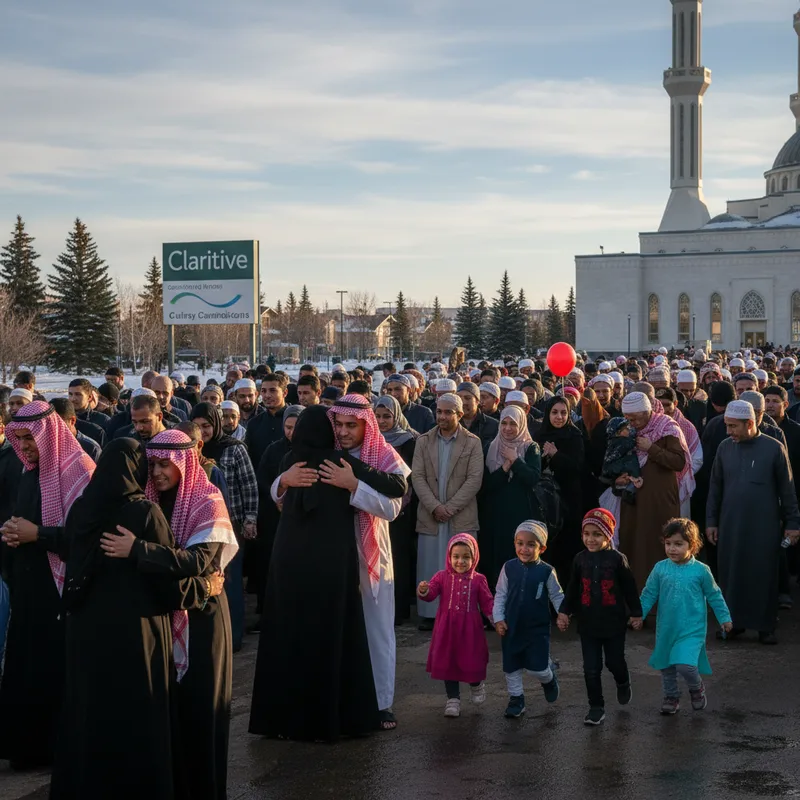
Chaudhry estimated about 100,000 Muslim people live in Calgary. He said most take Eid al-Fitr off work or school because it is a major day of worship.
“They understand this is a very important day for Muslims,” he said. “I appreciate how they are respecting everybody … This is something we enjoy in Canada.”
Calgary’s event calendar often highlights large gatherings that reshape the city for a day, from major sports tournaments to summer festivals. The city is also preparing for other big draws, including the 2028 World Cup of Hockey, which will bring visitors and security planning of its own.
How global conflict shaped prayers in calgary
This year’s Ramadan and Eid arrived amid heightened conflict in the Middle East, Chaudhry said. He said the community added special prayers for peace, unity and safety.
“This is one of the largest purpose-built mosques in Canada,” he said. “The thousands of people gathered here, men and women. we are celebrating, but we have the feelings of those people going through hard times on the other side of the world.”
Matin Syed, one of the presidents within the women’s organization, said the news from abroad sat heavily with her during Ramadan. “These days, that’s what I was thinking (of). that during the month of Ramadan, when everybody’s praying and their main focus is striving in the way of God, and they had to go through all this violence,” she said.
Syed described the daily reality her relatives face. “With the airspace closed, with the schools closed, with the sirens wailing, with the missiles in the sky. it’s really scary. But they’re spending their days in prayers, and they’re trying to be as calm as they possibly can.”
What comes next after eid prayers
Syed said prayers extended beyond any one conflict zone. “It doesn’t matter who it is, where it is, we believe it’s all humans, and all innocent lives should be protected and should be given precedence over all other matters,” she said.
She also urged political leaders to pursue diplomacy. “This is the time when leaders of the world should combine, sit together, talk everything out, instead of the war that’s been happening, no matter where it is in the world.”
Even with the strain of global headlines, Syed said the community still gathered with gratitude on Friday. “We’re celebrating the sacrifices made and the efforts we did in terms of doing fasting, self reformation and just striving to be better Muslims in general,” she said.
The day, she said, centres on worship done together. “This is a time to celebrate, to eat together. Eid is a combined worship. it’s not done individually. so we join each other in the mosque,” she said. “This is the opportunity for us to pray together (and) worship together.”
In Calgary, the next major public wave of mass gatherings arrives with Stampede season, including long-range projects tied to the grounds, such as the Stampede’s 20-year park rebuild plan. For worshippers leaving Baitun-Nur Mosque on Friday, the next stop was simpler: a shared meal later that day.