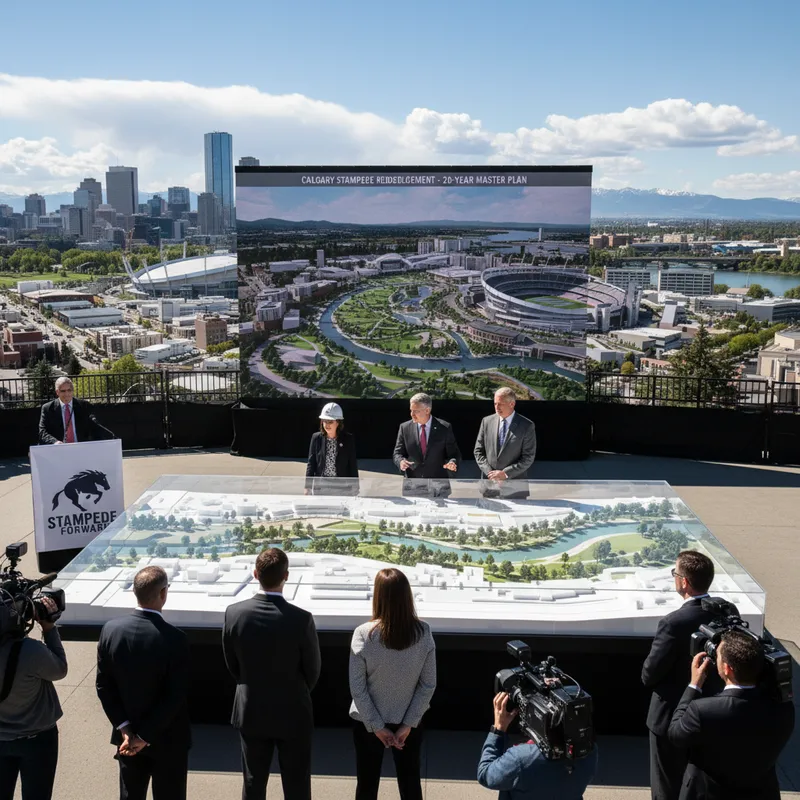
Much of Stampede Park, as Calgarians know it, is slated to change over the next 20 years.
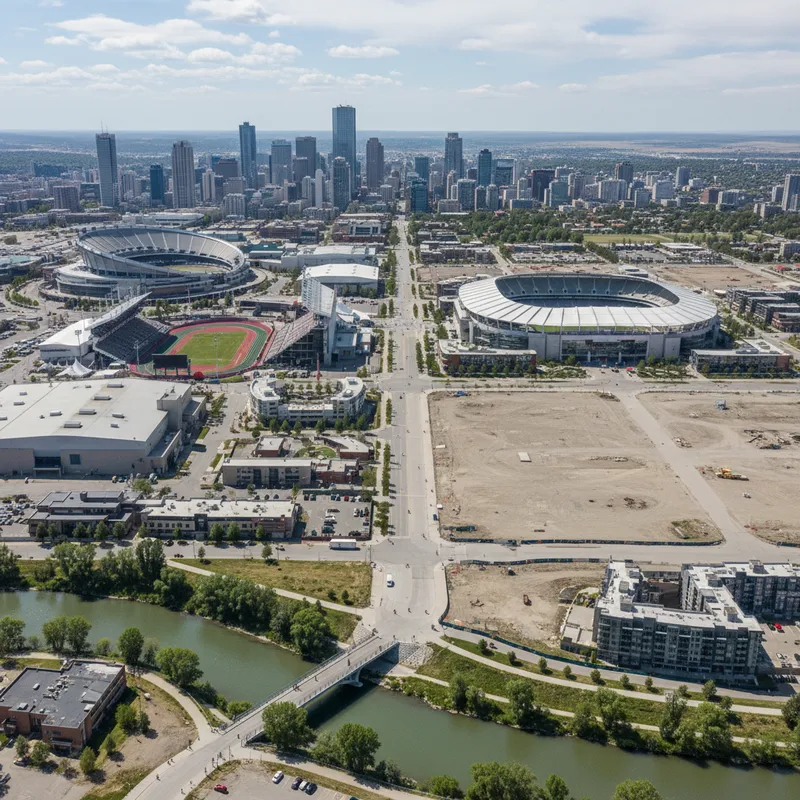
The Calgary Stampede has released a long-term master plan that would reshape the grounds with new buildings, new public spaces and, eventually, a new home for CFL football.
The plan sketches out a phased rebuild of the park over two decades. It also signals that some familiar structures will disappear as work advances.
What is in the calgary stampede 20-year master plan?
The Stampede is pitching the plan as a way to modernise the grounds while keeping the annual 10-day festival at its core.
In the video release announcing the plan, the Stampede frames the rebuild around the need to “stay relevant,” and to create space that works year-round.
The blueprint is not a single construction project. It is a sequence of projects that would unfold as funding, approvals and design work line up.
One of the biggest public takeaways is the possibility of a new stadium for the Calgary Stampeders. The plan also points to broader economic potential tied to a redesigned district that could host more events.
Which parts of stampede park could disappear?
The plan indicates that “many familiar sights” would eventually be removed or replaced as redevelopment progresses.
It does not mean the Stampede itself is moving. It does mean the look and feel of the grounds could shift significantly from one decade to the next.
Large site redevelopments often require temporary relocations of programming to keep events running. That can mean midstream changes to where visitors enter, where shows are staged and where midway operators set up.
Will calgary get a new CFL stadium?
The plan’s most politically and financially sensitive idea is a new home for CFL football in Calgary.
In the report, the redevelopment is tied to “a new home for CFL football in Calgary,” positioning a stadium as a potential anchor for the district.
Stadium plans typically hinge on financing and negotiations between teams, governments and site owners. The Stampede has not provided a construction start date or cost in the material provided with the video.
Calgary has been leaning on big-ticket events to keep momentum in its event economy. The city is also set to co-host the tournament outlined in Calgary and Edmonton to host 2028 World Cup of Hockey, which will further test venue capacity and transport planning.
What does the master plan mean for jobs and the local economy?
The Stampede’s pitch includes economic upside from more year-round activity on the grounds.
That argument fits a broader pattern in Calgary, where organisers want facilities that can host conventions, concerts and sports outside peak summer season. The annual Stampede remains a centrepiece, but the business case for redevelopment often rests on the other 355 days.
The plan also lands as other major event organisers map out future programming. The Calgary Chamber Stampede Party returns in July 2026, adding another date on the summer calendar that depends on predictable site logistics.
For residents watching the long horizon, the key question will be sequencing. A 20-year build can span multiple economic cycles, multiple councils and shifting construction costs.
Calgary’s experience with large venue projects shows how quickly assumptions can change. Materials and labour costs move, and public tolerance for disruption shifts as nearby neighbourhoods densify.
How does this fit with calgary’s wider event and travel scene?
The Stampede plan is local, but it sits in a North American race to keep destinations attractive to visitors who can choose other cities.
That competition is visible in travel and event guides that try to capture discretionary spending. A recent example is things to do in San Diego, a reminder that tourism dollars follow programming and easy access.
For Calgary, the stakes are practical. A rebuilt Stampede Park would need to handle major crowds, support transit access and keep pathways open during long construction windows.
Safety, permitting and public procurement rules will also shape what can be built and when. For reference on federal infrastructure frameworks that can intersect with major projects, readers can consult Infrastructure Canada.
In the video announcing the master plan, the Stampede’s message is blunt about the motivation. The Calgary Stampede aims to “stay relevant,” it says.
Stay relevant.
The next concrete milestone will be when the Stampede brings specific project phases forward for approvals and funding, following the plan’s March 18, 2026 release date.