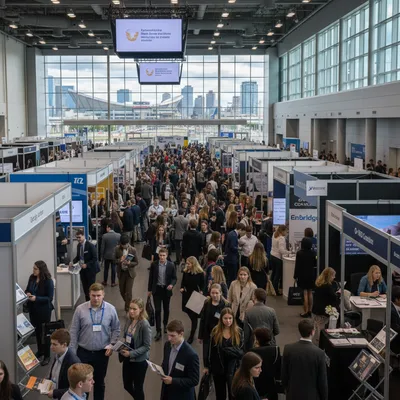
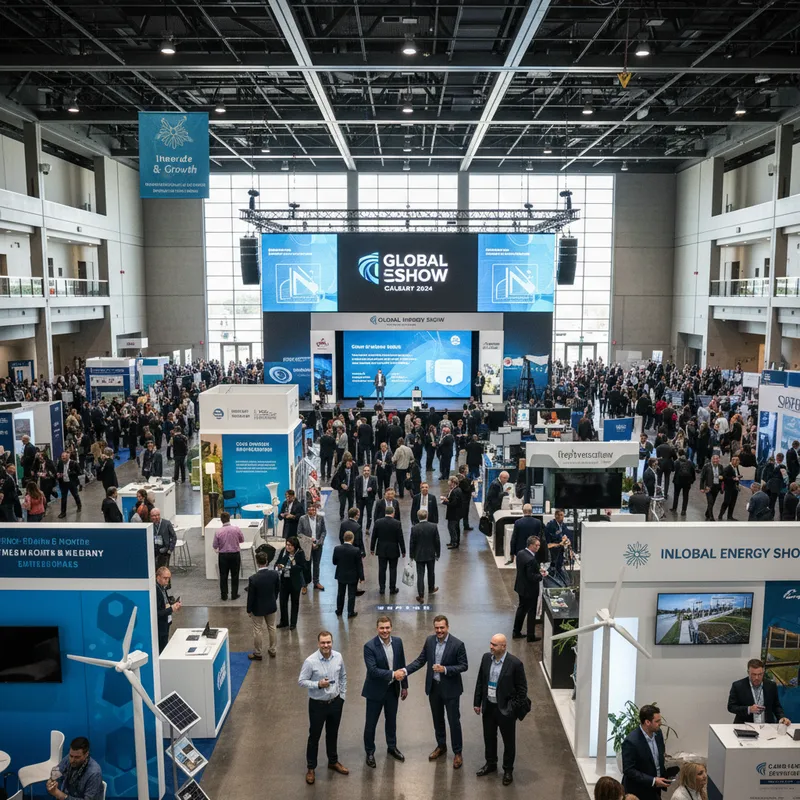
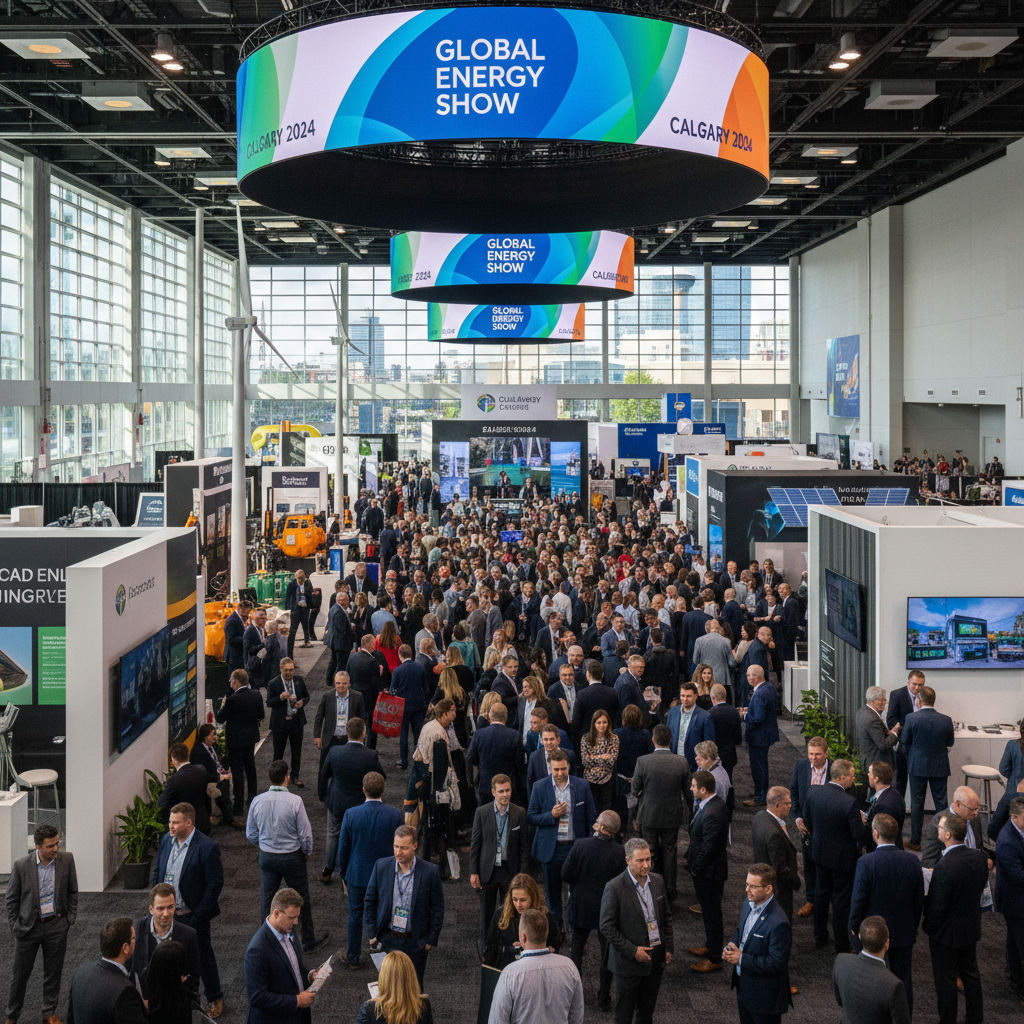
Calgary is once again the centre of the North American energy universe as thousands of industry leaders, investors, and policymakers gather for the Global Energy Show, which runs from Tuesday to Thursday at the BMO Centre. Organizers report the event is the most successful it has been in a decade, with an expected 30,000 attendees signaling a renewed sense of optimism in Canada's energy sector.
The three-day conference comes at a pivotal moment, marked by high commodity prices and significant geopolitical instability, including the effective closure of the Strait of Hormuz. While creating global uncertainty, this landscape has also spotlighted Canada's role as a stable energy producer.
A show transformed
Now in its 58th year, the Global Energy Show has evolved significantly from its origins as a showcase for oilpatch heavy equipment. The modern event reflects the dramatic transformation of the energy industry itself, with a growing focus on diversification and technological innovation. The show floor, once dominated solely by drilling and extraction machinery, now features extensive exhibits on nuclear power, battery storage, and an entire section dedicated to artificial intelligence. The expansion is tangible, with this year's event being approximately 20 per cent larger than last year's. Underscoring the shift in focus, about one-sixth of the entire trade show is now dedicated to AI and data centres, a massive increase from just a handful of booths in the previous year. This reflects the dual role of technology as both a major consumer of energy and a critical tool for optimizing its production and distribution. Similar issues have surfaced in Waikato, where Waikato University expands environmental planning studies.
This diversification is attracting new participants and those who have been away for years. Tahbit Chowdhury, the engineering director for the Toronto-based research firm FeedBand Labs Inc., is attending for the first time in 11 years. His company’s revenue was decimated by the 2015 oil price crash, a downturn he said was largely outside the control of Canadian governments. He returns with cautious optimism.
New technologies take centre stage
Among the new wave of exhibitors is Kevin Lin, CEO of the Ontario-based Blink Energy Storage Solutions. It is his first time at the show, and he was drawn by the city's reputation. "What drew us here to Calgary is that it is the centre of the energy industry in Canada," Lin said.
His company sells battery units ranging from the size of a refrigerator to a full shipping container, designed to help industrial clients reduce electricity costs. Lin sees energy storage as a crucial next step for the sector. He said that integrating battery storage with various generation sources, like renewables or natural gas, is the "next phase" of Canada’s energy industry. "We want to work with commercial and industrial companies; it could be private companies, it could be larger-scale public companies as well, to reduce their electricity costs," Lin said, noting his past work with data centres.
The combination of high-level policy discussions and ground-level innovation is a hallmark of the event. Attendees include prominent figures such as Cenovus Energy Inc. CEO Jon McKenzie, federal Minister of Energy and Natural Resources Tim Hodgson, and Alberta Premier Danielle Smith. Their presence underscores the importance of collaboration between industry and government in navigating the energy transition.
Local focus in a global market
Amid the global discussions, local Calgary companies remain focused on tangible growth. Steve Hughes, a technical sales representative with John Brooks Co., a Calgary-based supplier of industrial equipment, said foot traffic and business have been steadily increasing each year. "Every year we grow," Hughes said. "The numbers keep going up, so that’s what shows that things like this (show) are paying off for us."
While aware of the global volatility, Hughes maintains a practical perspective on his business strategy. He focuses on what his team can manage directly, rather than being distracted by market forces beyond their influence.
"We just try to control what we can control," he stated while demonstrating one of his company’s pumps on the show floor. "We’re just gonna do what we normally do, show off our stuff here; we’re going to educate people, do our best to grow."