
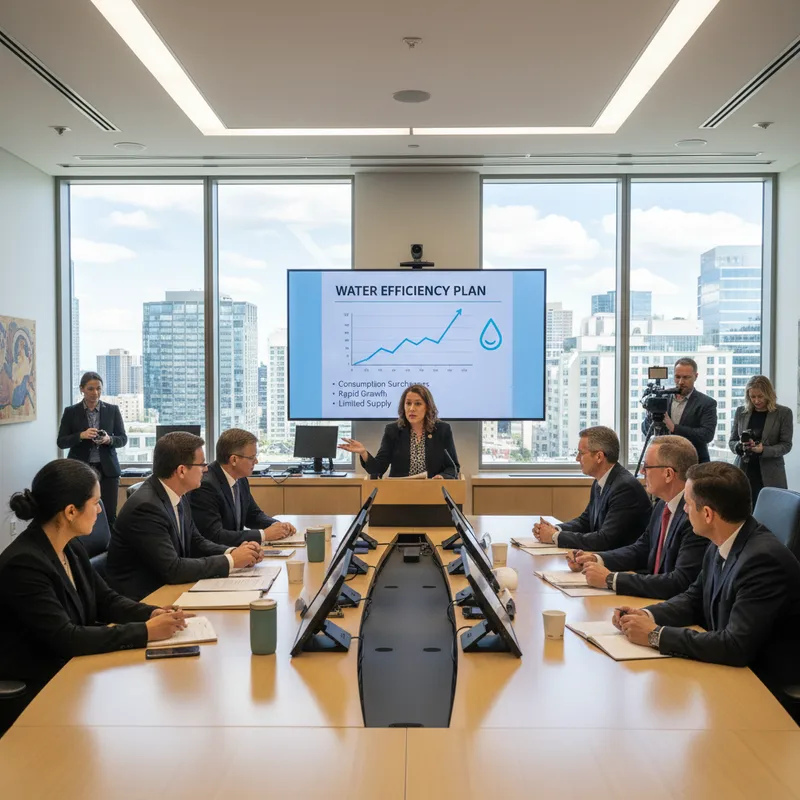
Calgary city council is exploring significant long-term changes to how and when Calgarians use water, including potential surcharges for high consumption during shortages. The proposed measures are part of a new water efficiency plan prompted by a report highlighting the growing risks to Calgary’s water security, which is under pressure from a limited supply and rapid population growth.</parts>
The plan aims to establish a more robust framework for managing the city's water resources, moving beyond the temporary, reactive restrictions seen in recent years. If adopted, residents could face higher costs for excessive water use and be subject to stricter year-round schedules for outdoor watering. This marks a pivotal shift in the city's approach to water management, reflecting a new reality shaped by climate change and urban expansion.</parts>
Calgary relies exclusively on the Bow and Elbow Rivers for its water, both of which are fed by mountain snowpack and glaciers. This reliance makes the city vulnerable to fluctuations in precipitation and temperature. With southern Alberta in the grip of a multi-year drought, river levels have been a persistent concern, threatening the long-term stability of the water supply for a metropolitan area of over 1.6 million people.</parts>
Growing city, dwindling supply
Calgary is one of Canada’s fastest-growing cities, a trend that puts increasing strain on municipal services, particularly water. The city’s population is projected to grow substantially in the coming decades, and each new resident adds to the cumulative demand on a finite resource. This issue of urban growth and its impact on infrastructure is a frequent topic of debate, as seen in the recent public hearings over blanket rezoning.</parts>
The challenge of a growing population is compounded by the effects of climate change. Warmer winters result in a smaller snowpack, and hotter summers increase the rate of evaporation and glacial melt. According to the Government of Alberta, prolonged drought conditions have impacted water basins across the province, leading to concerns about water availability for drinking, agriculture, and industry.</parts>
City administration's report to council emphasizes that the current water management system may not be adequate to handle the dual pressures of growth and a changing climate. The proposal for surcharges and tightened restrictions is a direct response to this assessment, aiming to secure Calgary's water future for generations to come.</parts>
Surcharges and restrictions on the table
The centrepiece of the proposed plan is a dynamic pricing model that would introduce surcharges during declared water shortages. This system is not intended as a blanket increase on water bills but as a targeted financial incentive to encourage conservation. Under the plan, households that exceed a certain consumption threshold would pay a higher rate for the excess water. This approach is designed to penalize wasteful water use while having a minimal impact on households that are already conserving.</parts>
This model is similar to strategies employed by other drought-prone municipalities in North America and Australia, where tiered pricing has proven effective at reducing overall demand. By making high water consumption more expensive, the city hopes to encourage residents and businesses to voluntarily cut back on non-essential uses, such as lawn watering and vehicle washing.</parts>
In addition to financial levers, the plan also calls for a comprehensive review of outdoor watering schedules. This could lead to more stringent, year-round rules that go beyond the current emergency restrictions. For Calgarians who enjoy gardening or maintaining a lawn, such changes would require adapting to new norms and potentially exploring water-wise landscaping alternatives, even during years with average rainfall. While challenging, these adjustments are critical for managing demand, especially during the dry summer months when outdoor activities, like those found in this guide to spring in Calgary, are most popular.</parts>
A response to ongoing system pressures
While drought and climate change are the primary drivers of the new strategy, the vulnerability of Calgary's aging water infrastructure has also played a significant role. Recent major water main breaks have forced city-wide restrictions, serving as a stark reminder of the system's fragility. These incidents have highlighted that securing the water supply is not just about the source, but also about the extensive network of pipes that deliver it to homes and businesses.</parts>
The province has taken notice of the city's challenges, with Alberta ordering a formal inspection into Calgary's recent water crisis. In response to infrastructure needs, city council recently approved a C$631 million budget increase to fund repairs and upgrades to the water system.</parts>
The proposed water efficiency plan is therefore part of a broader, multi-pronged effort to build a more resilient system. By combining infrastructure investment with demand-side management, the city aims to create a sustainable water future. More information on the city's current conservation efforts can be found on the official City of Calgary website.</parts>
Next steps will see the proposal debated by a council committee before it can proceed to a full council vote. The discussions in the coming weeks will be critical in shaping a policy that will affect every Calgarian and define the city’s relationship with its most precious resource for the foreseeable future.</parts>