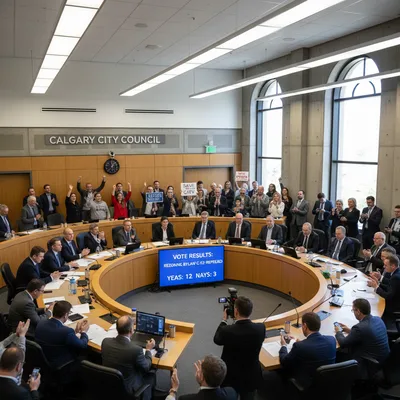
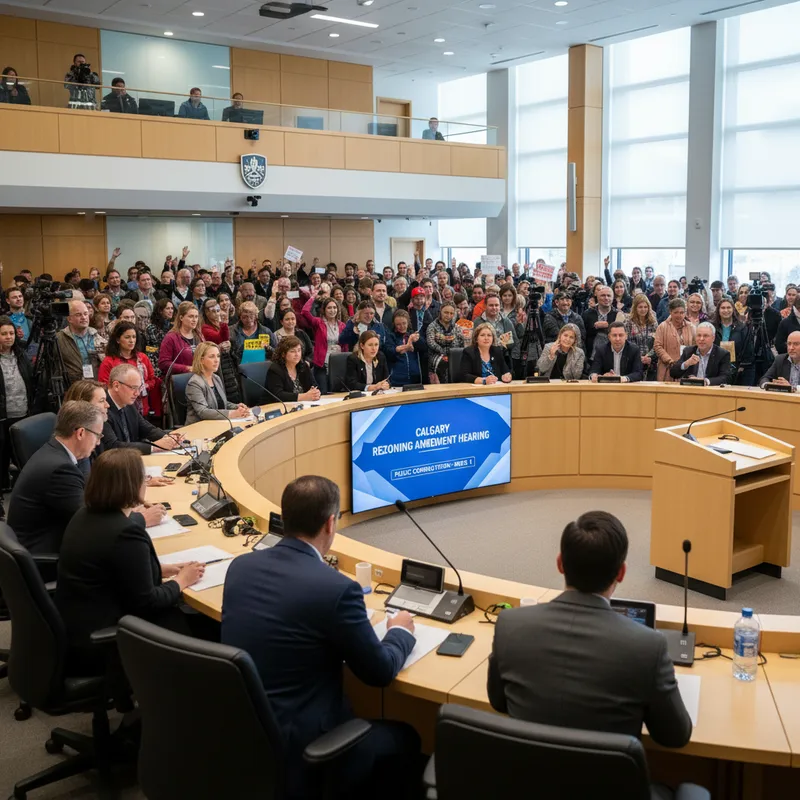
Calgary city council has launched a marathon public hearing to repeal the controversial blanket rezoning bylaw. The bylaw sparked unprecedented community backlash two years ago.
The hearing began Monday at city hall. It will run all week. A new slate of councillors won election on promises to overturn the policy.
Blanket rezoning allowed fast-tracked rowhouses and townhouses in single-family neighbourhoods without public hearings. The move drew record crowds to city hall in 2024.
What happened with calgary's blanket rezoning
The previous council pushed through rezoning in 2024 despite massive public opposition. Former mayor Jyoti Gondek touted it as a solution to Calgary's housing crisis. Then-prime minister Justin Trudeau supported the policy.
Veteran councillor Andre Chabot said the previous council underestimated the public reaction.
"They didn't think it was going to have that much of a negative backlash. It never stopped. It just kept building. It upset people more and more as time went on, when they saw blanket rezoning hitting the ground."
Residents opposed the rezoning. They worried about losing their neighbourhoods' character and quality of life.
Why residents opposed the changes
Chabot said residents saw potential for major changes to their "peace and tranquility" under the new rules.
"Quality of life. That's what they're fighting for. Quality of life."
The councillor suggested the previous council wanted to impress planning professionals across Canada. They positioned Calgary as a leader in higher-density housing.
Politicians received an earful from angry residents during the recent election campaign. Many councillors who promised to repeal blanket rezoning won their seats.
Quality of life. That's what they're fighting for. Quality of life.
Confusion over public feedback forms
Rookie councillor Rob Ward raised concerns Monday about the city's collection of public input on the repeal.
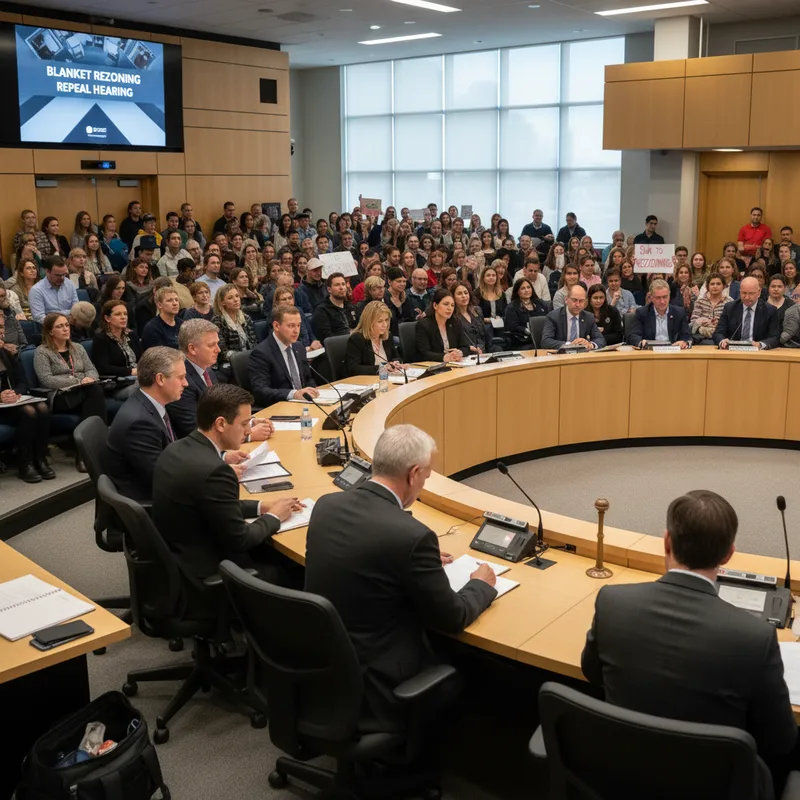
Ward said the feedback form confused residents. It asked whether they supported "getting rid of" blanket rezoning. The form should have asked about the policy itself.
Ward reviewed all responses to determine what people meant. He found nearly four out of five supported repealing the rezoning.
"A simple question turned into a convoluted answer by city hall planners," Ward said.
What happens next for calgary housing
Mayor Jeromy Farkas called the hearing "democracy at its best." He warned that Calgary still needs to address its housing challenges.
Farkas campaigned on preparing Calgary for a population of 2 million. He said blanket rezoning was sold as a way to make housing more affordable and build more homes.
"The mayor says it didn't happen as advertised," according to the hearing coverage.
The mayor offered a cryptic warning about the city's future growth.
"At the end of the day I can't prevent change from happening."
Most council members appear ready to repeal blanket rezoning. They will return to the previous system requiring public hearings for density changes in established neighbourhoods.
The hearing continues through the week. Hundreds of speakers will address council. The City of Calgary website has details about speaking times and procedures.
Historic public engagement at city hall
The blanket rezoning debate has generated unprecedented public involvement in Calgary municipal politics.
The original rezoning hearings two years ago drew crowds never before seen at city hall. Residents lined up day after day to speak against the changes.
This civic engagement is rare in Calgary. Fewer than four in 10 eligible voters participated in last fall's election.
The Calgary Stampede's recent 20-year development plan shows how the city grapples with balancing growth and community character.
Calgary prepares for major events like the 2028 World Cup of Hockey. Questions remain about accommodating its growing population while respecting existing neighbourhoods.
The repeal hearing marks a significant moment in Calgary's planning history. The outcome will shape development policies for years to come.