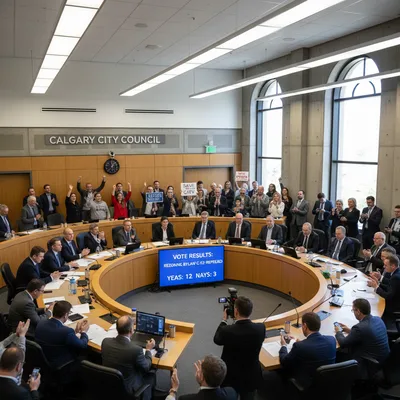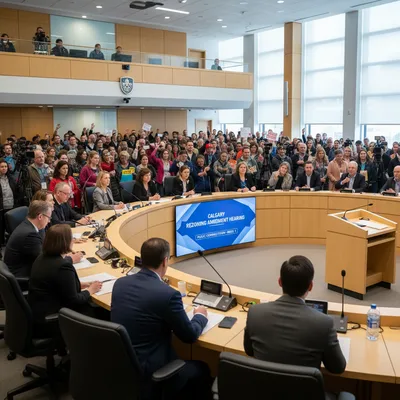
Calgary Mayor Jeromy Farkas has publicly challenged Premier Danielle Smith’s government over a significant increase in the provincial portion of property taxes, arguing the move contradicts the premier's previous stance on municipal funding.
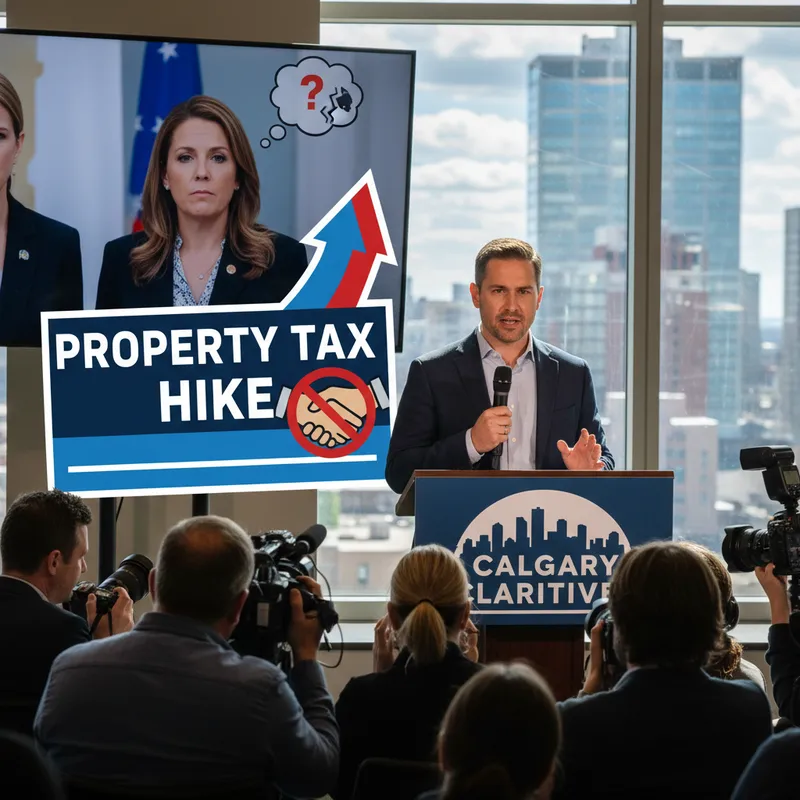
The dispute began Wednesday when Farkas posted on X, the platform formerly known as Twitter, highlighting that the provincial government's tax requisition effectively magnifies a modest 1.2 per cent property tax increase approved by city council to a rate nearly ten times higher. Farkas stated that nearly half of a Calgary homeowner's total property tax bill is directed to the provincial government.
At the heart of Farkas's criticism is a video he shared of Smith from her 2022 United Conservative Party leadership campaign. In the clip, Smith appears to criticize the existing system where the province collects a significant portion of municipal property taxes for its general revenues, describing it as an 'equalization formula' for cities.
This political clash revives long-standing debates in Alberta about fiscal arrangements between the provincial government and its major urban centres. Historically, Calgary has been a significant contributor to provincial revenues, a point not lost on local leaders who often advocate for a greater share of funding to be retained within the city to address its specific infrastructure and service needs.
Mayor points to premier's past statements
During her bid for the UCP leadership, Smith expressed sympathy for the fiscal pressures faced by municipalities. Farkas highlighted a specific interview where Smith seemed to align with his predecessor, former mayor Jyoti Gondek, on the issue. Similar debates about government transparency have arisen elsewhere, as seen in the Ford government's controversial records bill.
I think Mayor Gondek has a great point. I’ve looked at it too – the amount of money that gets taken out of Calgary in education property taxes versus what gets transferred back in municipal grants. Are we just going to keep on doing this, having all that money go into general revenues or are we actually, finally going to develop a fair deal for our cities?
Farkas seized on these past comments, framing his current opposition as an effort to hold the premier accountable to her own words. 'When she characterized the current system that we have as equalization, I fully agree with those comments,' Farkas said in a later interview. 'When she stated that she’s seeking a more reasonable deal for Alberta municipalities, I also agree with that, too.' The mayor's strategy appears to be leveraging the premier's past rhetoric to negotiate a better fiscal arrangement for Calgary.
The financial impact on Calgary homeowners
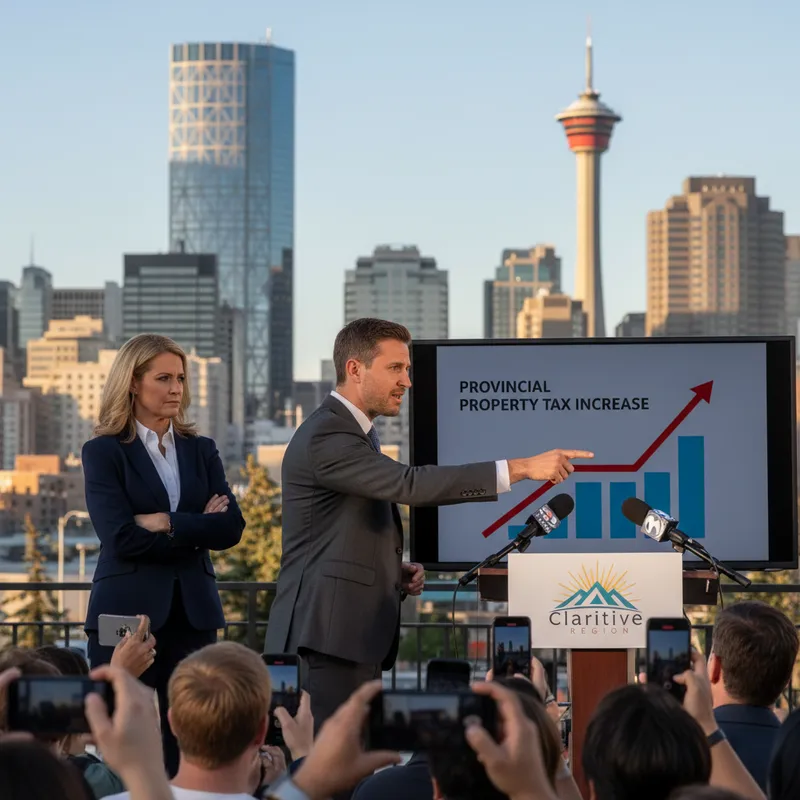
According to figures released by the mayor’s office, the provincial government has increased its portion of property taxes by 57 per cent over the last four years. The most recent hike amounts to a 21 per cent increase from the previous year.
For the average Calgary household, this translates to an additional $339 on their property tax bill. Farkas noted that homeowners in neighbouring communities like Chestermere and Airdrie will face even steeper increases. In contrast, he said, the increase for an average Edmonton homeowner will be a more modest $154. This disparity has fuelled concerns about fairness and whether Calgary is shouldering a disproportionate share of the provincial tax burden, a sentiment that often surfaces in discussions about property taxes.
The additional funds collected from Calgary and other municipalities are part of the provincial education property tax requisition, which is pooled and then redistributed across Alberta to fund the public school system. While the principle of funding education is not in dispute, the method of collection and the amount requisitioned from rapidly growing cities like Calgary remains a point of contention.
Province defends tax hike as necessary investment
Responding to the mayor's criticism, Alberta’s Municipal Affairs Minister Dan Williams stated the government has been 'consistent' in its focus on funding the core needs of municipalities, particularly education. He defended the tax as essential for significant investments in the province's school infrastructure.
'Education is not going away,' Williams said. 'We are building 161 new schools across the province, we’ve announced 14 new in the Calgary region, we have a school accelerator fund of over $8 billion and we’re also funding $10.2 billion of operational funding.' The minister emphasized that education property taxes are a critical component of these investments. According to the Government of Alberta, this funding model is designed to provide all students with a high-quality education, regardless of local property values.
Williams acknowledged that ABMunis, an organization representing Alberta's municipalities, has proposed new revenue models and expressed an openness to discussing them. 'I have been saying for months I am open to alternate forms of revenue and where we can get new forms of trying to support public infrastructure that I’m excited to keep working on,' he said, suggesting a door remains open for future negotiations.
A call for collaboration, not conflict
Despite the pointed public exchange, Mayor Farkas, a fiscally-conservative politician who campaigned on responsible spending, insisted he is not looking for a fight with the provincial government. 'I’m not seeking acrimony. I’m not seeking a dysfunctional relationship,' he said, adding that he maintains regular contact with provincial ministers.
Farkas, who served on city council from 2017 to 2021 before his mayoral victory in 2025, framed his position as one of accountability and advocacy for his constituents. 'At the end of the day, we need them to succeed,' he said of the provincial government. The challenge for the mayor will be to balance his push for a 'fair deal' with the need to maintain a productive partnership with the province on other critical files, from transit to housing.
For now, Farkas says his focus remains on fiscal responsibility at the municipal level while advocating for transparency on how property tax dollars are used. 'Our council team cares about affordability,' he stated. 'We will continue to push for responsible spending while investing in core services like safety and infrastructure. Let’s work together for a fair deal for municipalities and deliver transparency for where property tax dollars actually go.' The next provincial budget will be a key indicator of whether this call for a new arrangement has been heard.