
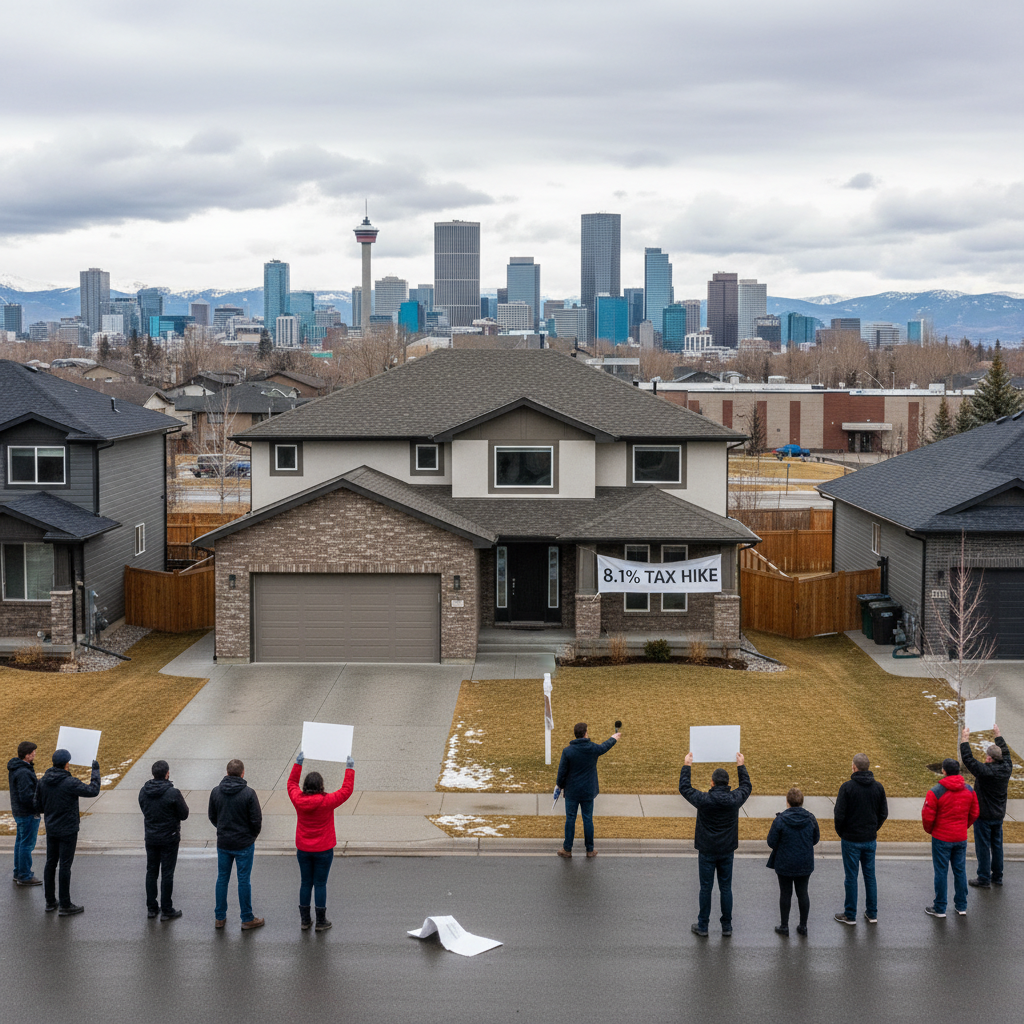
Calgary homeowners will face an 8.1 per cent property tax increase this year after city council finalized the rate on Tuesday. The change means the owner of a typical home will pay approximately $400 more in 2026.
While the overall increase is significant, Mayor Jeromy Farkas stressed that the municipal portion of the tax levy rose by only 1.2 per cent. The majority of the surge comes from the provincial government's portion, which jumped by 19.8 per cent for residential properties. Non-residential properties will experience a more modest total increase of 2.5 per cent, which includes an 8.8 per cent rise in the provincial portion.
The city is legally required to collect property taxes on behalf of the province to fund education. This portion accounts for 41.5 per cent of the total property tax bill in Alberta, funding schools, healthcare, and provincial contributions to major infrastructure projects. This year's provincial increase is being described by the mayor as the largest in Calgary's history. This situation echoes concerns seen elsewhere in the province, where home prices reached a record peak.
Province's hike undermines city's efforts
Mayor Farkas expressed frustration with the provincial government, stating the city’s hard work to limit spending was 'undermined' by the province's decision. He said the significant increase from the province will add to an 'affordability crisis' for many Calgarians already dealing with economic pressures.
The difference between the city portion of the property tax and the provincial portion of the property taxes is jarring. To see us as a city council team live within our means, reduce that increase down to (1.2) per cent, and to have all of that work erased with a massive increase from the provincial government, it begs some more serious questions.
“We are very concerned about the affordability crisis that this increase is going to trigger,” Farkas said. He noted that the 'vast, vast majority' of the approximate $400 increase for a typical homeowner is a direct result of the provincial budget.
To provide clarity for residents, Farkas floated the idea of issuing multiple property tax statements. The goal would be to make it 'crystal clear' to taxpayers which portion of their money is going to the municipality versus the provincial government. Calgarians are 'overtaxed,' Farkas said, arguing the city sends more money to the province than it gets back in funding and services.
“We’re paying way more into property taxes than we’ve received back here in this province, and even the premier herself has indicated that this is a form of equalization payments,” he said. Farkas is calling for 'fair treatment' and an 'equal partnership' compared to other Alberta municipalities, especially with the recent rise in provincial oil revenues.

Council seeks long-term savings
While council cannot control the provincial tax rate, some members are focused on finding savings within the city's own operations. Ward 13 Coun. Dan McLean said council 'worked very hard' to keep the municipal increase low and will continue to look for efficiencies.
“I can’t control what the province does, but what I can do is work at what the city imposes for a tax increase,” McLean said. “I’ll be working very hard with our strategic council meetings and our budget deliberations so that we keep our end as low as possible.”
As part of this effort, council approved a motion for a zero-based review program, which passed with a 13-2 vote. The process involves assessing and justifying all expenditures from scratch at the beginning of a budget cycle, rather than simply making adjustments to the previous year's budget. A pilot program will review three city business units, requiring an investment of $4 million between 2026 and 2028.
McLean, who put the motion forward, is optimistic about the potential for significant savings. “Last time we did that, we found $60 million in savings,” he said. Though he acknowledged the process is slow, he believes it is a 'very valuable tool' that is worth starting now.
Investing in efficiency
Despite some reservations from council members, the zero-based review motion received strong support. Mayor Farkas endorsed the plan, calling it 'overdue' and a necessary investment in proper financial management.
“I think for us to invest in proper financial management, there is an upfront cost. We do need to bring in folks external to the organization to be able to help identify areas of efficiency,” Farkas explained. He anticipates the review will uncover at least $4 million in savings, effectively paying for itself.
Even if the savings aren't massive, Farkas believes the exercise will provide valuable advice for operational improvements across the organization. The review is one of several measures council is exploring as it navigates a challenging financial landscape, including recent considerations for water surcharges amid shortage fears and a competitive job market impacting residents. More detailed information on the provincial portion of the tax can be found on the Government of Alberta's website.
As tax notices are prepared to be sent out in May, the mayor affirmed his commitment to scrutinizing city spending. “It makes sense, over the course of a council term, that we would leave no rock left unturned,” Farkas said.