

Finding the “best” K to 12 school in Calgary is rarely about a single list. Most families are weighing a mix of academic results, program fit, commute, fees, and whether a child will feel supported day to day. In 2026, that search is also shaped by Calgary’s fast growth, shifting attendance boundaries, and a public conversation about where new schools should go and who gets access.
This guide is for parents who want to research and compare Calgary schools like a local, across public, Catholic, charter, and private options. You will find a clear way to use rankings (without over-trusting them), plus practical steps for narrowing a shortlist, touring, and confirming registration rules.
Two quick caveats. First, school “rankings” are typically based on standardized measures such as provincial achievement tests and Grade 12 diploma exams, they are useful signals, not the whole picture. Second, the best school for your family depends on the student in front of you, including learning needs, temperament, interests, and the kind of community that helps them thrive.
Top-ranked high schools in Calgary for 2026
If your child is entering high school, most parents start with diploma exam strength, university preparation options (IB, AP), and breadth of programming. Based on commonly cited Fraser Institute style rankings and Calgary-focused roundups, the names that come up repeatedly include a mix of public, Catholic, and private schools.
Here are schools frequently referenced as top performers in Calgary in 2026, along with the practical details parents usually compare first.
- Western Canada High School (CBE, public), 641 17 Ave SW, Calgary. Known for strong academics and a central location. Website: https://school.cbe.ab.ca/school/westerncanada/Pages/default.aspx
- Sir Winston Churchill High School (CBE, public), 5220 Northland Dr NW, Calgary. Large school with a wide course selection and well-known IB programming. Website: https://school.cbe.ab.ca/school/sirwinstonchurchill/Pages/default.aspx
- Dr. E.P. Scarlett High School (CBE, public), 220 Canterbury Dr SW, Calgary. Often noted for academic strength and a broad extracurricular lineup. Website: https://school.cbe.ab.ca/school/dr-e-p-scarlett/Pages/default.aspx
- Ernest Manning High School (CBE, public), 20 Springborough Blvd SW, Calgary. Frequently cited for strong results and program variety. Website: https://school.cbe.ab.ca/school/ernestmanning/Pages/default.aspx
- William Aberhart High School (CBE, public), 3009 Morley Trail NW, Calgary. Known for a wide student population and course options. Website: https://school.cbe.ab.ca/school/williamaberhart/Pages/default.aspx
- Bishop Carroll High School (CCSD, Catholic), 4624 Richard Rd SW, Calgary. A well-known Catholic option with a self-directed learning model. Website: https://www.cssd.ab.ca/schools/bishopcarroll/
- St. Francis High School (CCSD, Catholic), 877 Northmount Dr NW, Calgary. Commonly listed among top Catholic high schools. Website: https://www.cssd.ab.ca/schools/stfrancis/
- Webber Academy (private), 1515 93 St SW, Calgary. Junior Kindergarten to Grade 12, frequently high on private-school rankings. Website: https://www.webberacademy.ca/
- Strathcona-Tweedsmuir School (private), 1440 17A St SW, Okotoks area (south of Calgary). K to 12. Commute is a factor, but it is often compared with Calgary’s top academic options. Website: https://www.sts.ab.ca/
Hours and access: Most school offices operate Monday to Friday during the school day, but open houses and tours are usually scheduled evenings in fall and early winter. Check each school’s “Registration” and “Open house” pages for current dates.
What to do next: For any school on your shortlist, confirm (1) whether it is a designated school for your address, (2) whether it accepts out-of-area or lottery applications, and (3) whether there are program prerequisites for IB, AP, arts, or language programs.
Best public elementary schools in Calgary (and how to verify rankings)
For elementary, parents are often trying to match foundational literacy and numeracy with the right classroom environment. Several Calgary public elementary schools are regularly highlighted in Fraser Institute style ranking summaries, including Sunalta School and Hillhurst School.
Examples that frequently appear in Calgary roundups include:
- Sunalta School (CBE), 1730 5 Ave SW, Calgary, K to Grade 6. Known for a balanced approach that includes daily physical education and fine arts. Website: https://school.cbe.ab.ca/school/Sunalta/Pages/default.aspx
- Hillhurst School (CBE), 1418 7 Ave NW, Calgary, K to Grade 6, including a gifted and talented program for Grades 4 to 6. Website: https://school.cbe.ab.ca/school/Hillhurst/Pages/default.aspx
- Briar Hill School (CBE), 1235 19 St NW, Calgary, K to Grade 6. Often described as a smaller community school. Website: https://school.cbe.ab.ca/school/BriarHill/Pages/default.aspx
How to verify the data: When a list cites “Fraser rankings,” go back to the source and confirm the year and methodology. The Fraser Institute’s compare tool allows you to search by school and view scores and trends over time: https://www.compareschoolrankings.org/.
Use rankings as a filter, not a decision: A difference of a few tenths on a 10-point scale can reflect cohort variation rather than a meaningful day-to-day difference in teaching quality. Focus on the “trend” line and stability, then pair it with a tour and program fit.
How to use Fraser Institute rankings without getting misled
Rankings are popular because they are simple. But simplicity is also the limitation. In Alberta, rankings tend to put heavy weight on standardized measures, especially Grade 12 diploma exam results, along with participation rates and outcomes over time.
Diploma exams still matter in Alberta high schools, they count for 30% of a student’s final mark in many core Grade 12 subjects. The Alberta government explains diploma exam rules and weighting in its bulletin: https://www.alberta.ca/system/files/educ-diploma-exam-general-information-bulletin.pdf.
Three ways to read a ranking like an analyst:
- Compare like with like. Look at schools with similar demographics and program mandates, not just a citywide list.
- Check multi-year patterns. A strong three-to-five-year trend is more reliable than one-year spikes.
- Look for “fit gaps.” Rankings cannot capture arts depth, inclusive education supports, counselling access, or belonging.
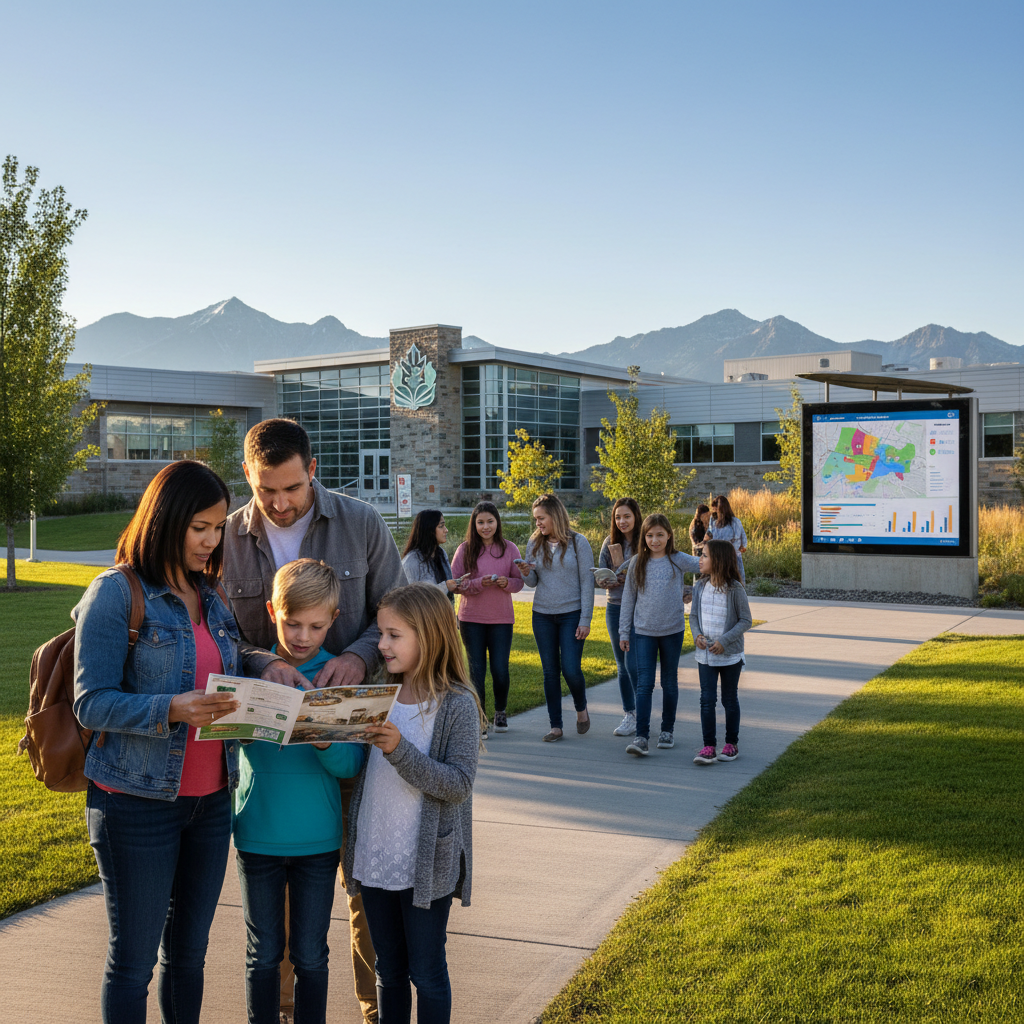
For a local example of “reading rankings wisely,” the YYC Wander school ranking dashboard notes that scores reflect academic outcomes but not program breadth, student supports, or equity context: https://yyc-wander.ca/Civic_Social_Analytics/School_Rank.html.
How to compare CBE, Calgary Catholic, charter, and private schools in Calgary
Calgary families typically choose between four main pathways. The “best” one depends on your child and what you can realistically access from your address.
- Public (Calgary Board of Education, CBE): Tuition-free. Many schools are catchment-based, with alternative programs (language, arts, STEM) often requiring separate registration steps. Start here: https://www.cbe.ab.ca/.
- Catholic (Calgary Catholic School District, CCSD): Publicly funded Catholic education. Many families also choose it for community culture and faith-based education. Start here: https://www.cssd.ab.ca/.
- Charter schools: Publicly funded, specialized mandates, usually citywide draws with lotteries and waitlists. Availability is limited and can be politically contentious. For context on how access and approvals play out locally, see Claritive’s coverage: Calgary city council rejects northeast charter school propos.
- Private schools: Tuition-based, often smaller classes and defined educational philosophies. Costs vary widely and can include fees beyond tuition (transport, uniforms, activities). A Calgary private-school ranking list is available via Our Kids: https://www.ourkids.net/compare-schools/rankings/calgary-private-schools/44.
Practical comparison checklist: Ask each school about class sizes, learning supports, literacy intervention, gifted programming, newcomer supports (ELL), counselling access, and how they handle transitions into junior high and high school.
School boundaries, registration, and lotteries in Calgary
In Calgary, access is often the deciding factor. A school may be “top-ranked,” but if it is your designated school and capped, or if it is an alternative program with limited seats, you may not be able to register. Similar issues have surfaced in growing Sydney suburbs, where school places were denied due to leadership failures.
What parents should verify early:
- Designated school for your address: Confirm through CBE or CCSD boundary tools and the school office.
- Program vs. building: Some programs are housed at a specific school but accept students from across the city.
- Transportation: A great program is less sustainable if the commute is 60 minutes each way.
- Lottery and waitlist rules: Charter and some alternative programs can have multi-year waitlists.
If you are house-hunting at the same time, treat school planning as part of your relocation plan. Claritive’s moving guide is a helpful starting point for building a timeline: Moving to Calgary: a 2026 checklist for new residents.
Weather reality check: Calgary winters can turn a short commute into a stressful one. It is worth factoring winter travel into your daily plan, especially for younger kids. For a local snapshot of how conditions can change quickly, see: Calgary faces heavy snow, plunging temperatures in weather w.
What to look for on school tours (questions Calgary parents should ask)
After you build a shortlist, tours and open houses are where you test whether the school’s “paper strengths” match your child’s needs. Bring a written list and do not be shy about specifics.
Questions that tend to surface real differences:
- How are reading and math interventions delivered in K to Grade 3?
- What is the average class size in your child’s grade this year?
- How do you support students with anxiety, ADHD, or learning disabilities?
- How much homework is typical, and how is it communicated to parents?
- What does a typical lunch hour look like (supervision, indoor space, activities)?
- What are your technology rules and phone policies?
- What are the core extracurriculars and how many students can participate?
- How do you handle bullying reports and restorative practices?
Cost questions (even for public schools): Ask about school fees, field trips, lunch programs, and any mandatory equipment or uniforms. For private schools, request a full annual cost estimate including registration, tuition, transportation, and activity fees.
Neighbourhood factors that affect school choice in Calgary
In Calgary, school choice and neighbourhood choice are tied together. Families often discover that the “right school” also changes their budget, commute, and quality of life.
When you compare neighbourhoods, consider:
- Daily route safety: Sidewalks, crossings, and winter maintenance.
- Parks and play spaces: Access to playgrounds and outdoor time matters, especially in elementary years. Calgary is also debating the future of playground infrastructure, which could affect community amenities long-term: Calgary may close over 80 per cent of playgrounds by 2036.
- Community supports: Libraries, recreation centres, and youth programming.
- Stability: Rapid growth areas can experience boundary changes and capacity pressures.
If you want a kid-friendly break from school research, you can also borrow ideas from other family travel guides and adapt them locally. For example, this cross-site list is a useful template for planning low-cost outings: 50 fun things to do in Brampton with kids (2026 spring and s.
A simple step-by-step method to shortlist Calgary schools
Parents often get stuck because there are too many variables. Here is a straightforward process that works for most Calgary families.
- Start with access. Identify your designated schools, plus any realistic alternatives within commuting range.
- Choose your non-negotiables. Examples include IB, strong learning supports, French immersion, smaller classes, or faith-based education.
- Use rankings to narrow, not decide. Focus on trends and stability, then shortlist 3 to 6 schools.
- Do two tours. One daytime tour if possible, plus an evening open house to meet more staff and families.
- Confirm registration in writing. Ask the office about deadlines, required documents, and waitlist rules.
- Run the “daily life test.” Drive the route at drop-off time, in winter if you can, and estimate door-to-door time.
This approach keeps you from over-indexing on a single metric and helps you make a decision you can live with on a Tuesday morning in February, not just on paper in May.